As clean energy demand grows, innovative solutions are reshaping resource use. India’s power sector achieved a peak demand of 242.49 GW in FY 2025-26, with energy shortages dropping to just 0.03%. While ground-mounted systems have led the way, water-based installations are becoming crucial by transforming underutilized reservoirs into energy hubs without sacrificing fertile land. Avaada is one of the leading companies in this renewable energy transition, leveraging advanced technology to ensure the efficient use of water and sunlight for a sustainable power grid.
What is a Floating Solar Power Plant?
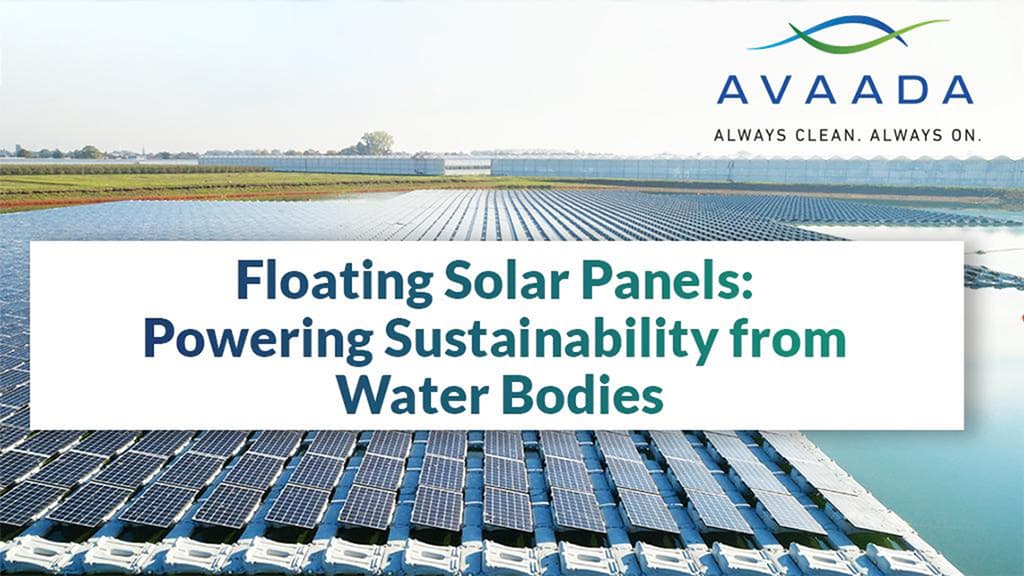
A floating solar power plant consists of photovoltaic modules mounted on a structure that floats on a body of water, typically a reservoir, lake, or pond. Unlike terrestrial systems, floating solar arrays do not require permanent land modification. These plants are engineered to remain buoyant and stable, even as water levels fluctuate. The energy generated is transmitted through underwater or floating cables to the shore, where it is integrated into the local or national grid.
The Global Rise of Floating Solar Panels
The global surge in floating solar is driven by the urgent need for renewable energy in densely populated areas. Asia-Pacific currently leads this movement, accounting for over 71% of global industry revenue. Countries like Japan and China have pioneered large-scale deployments to overcome land scarcity. Covering just 1% of the world’s man-made reservoirs with these panels could potentially generate 404 GWp of clean energy, making them a cornerstone for achieving net-zero targets.
Read more : Rooftop Solar Companies In India
How Floating Solar Plants Work
A floating solar plant operates on the same basic principles as land-based systems but utilizes specialized infrastructure to operate in an aquatic environment. The integration of high-performance floating solar panels ensures consistent electricity generation despite the dynamic nature of water bodies.
Components of a Floating Solar System
The integrity of a water-based system depends on several critical components designed for durability:
- Floats/Pontoons: Typically made of high-density polyethylene (HDPE), they provide the buoyancy needed to support the weight of the panels.
- PV Modules: Highly efficient panels designed to resist humidity, dust, and potential salt spray.
- Mooring System: High-strength ropes or chains that anchor the floating platform to the reservoir bed or shore, preventing it from drifting during high winds.
- Inverters and Cables: Specialized waterproof equipment that converts DC power to AC and transports it to the grid.
Electricity Generation and Grid Connection
In a floating solar power plant, the process begins with panels absorbing sunlight and converting it into Direct Current (DC). This power travels through insulated cables to inverters, which are often housed on floating platforms or nearby land. Once converted to Alternating Current (AC), the electricity is stepped up by transformers and fed into the utility grid.
The Advantages of Floating Solar Panels
The benefits of floating solar panels extend far beyond simple power generation. They offer a synergistic relationship with the water bodies they occupy, solving multiple environmental challenges simultaneously.
Enhanced Efficiency Due to Water Cooling
Floating solar panels benefit from the cooling effect of water, which helps maintain efficiency. This natural heat sink can enhance energy performance by at least 13% compared to ground-mounted systems.
Optimal Land Utilization
Floating solar panels offer a strategic solution for densely populated India by utilizing the 18,000 square kilometers of reservoir area to potentially generate up to 280 gigawatts (GW) of solar power, all while preserving agricultural land for food production and urban development.
Reduced Water Evaporation and Improved Water Quality
A floating solar plant reduces sunlight on the water surface, significantly lowering evaporation rates, which is vital for water-stressed regions. The shade limits algae blooms, helping to maintain better water quality for local ecosystems and human consumption.
Adaptability to Water Level Fluctuations and Flood Protection
A modern floating solar power plant adjusts with water levels, remaining operational during monsoons or droughts. These structures can also serve as breakwaters, reducing wave impact on dam walls and helping prevent erosion.
Largest Floating Solar Power Plant in India
India has become a global leader in this technology, with several massive projects either operational or under development. The largest floating solar power plant in India, currently in phased development, is the Omkareshwar Floating Solar Park in Madhya Pradesh, with a planned capacity of 600 MW. Another landmark is the 100 MW NTPC Ramagundam project in Telangana, which features over 4.4 lakh solar modules spread across its reservoir.
Avaada is actively contributing to this growth. For instance, the Bihar Renewable Energy Development Agency (BREDA) is commissioning the state’s first 2 MW floating solar plant in Darbhanga, developed by Avaada. This project not only generates green energy but also promotes local fish farming, showcasing the multi-functional potential of water bodies.
Challenges and Considerations for Floating Solar Projects
Despite the benefits, implementing floating solar panels in India requires careful engineering and environmental oversight.
Initial Costs and Engineering Complexities
Setting up a floating solar plant is typically 20% to 30% more expensive than land-based projects due to the costs of specialized buoyant structures, moisture-resistant electrical components, and complex mooring systems designed to handle waves and wind.
Long-Term Durability and Environmental Impact Assessment
Floating solar systems in aquatic environments face risks such as corrosion and fatigue, requiring high-quality materials and thorough site analysis to achieve a 25-year lifespan. Environmental impact assessments are essential to ensure that reduced sunlight does not harm local aquatic biodiversity.
The Future of Floating Solar in India: Avaada's Vision
The expansion of floating solar panels in India is a critical component of the national target to achieve 500 GW of non-fossil fuel capacity by 2030. By integrating these systems into the renewable energy mix, India can ensure a more stable and diverse power supply.
Integrating with Traditional PV Solar Panels and Renewable Energy Mix
The future of energy security lies in hybrid systems that combine floating solar with hydropower. This approach enables continuous power generation, with solar providing energy during the day and reservoirs conserving water for hydro generation at peak evening hours, enhancing grid resilience.
Avaada’s Commitment to Sustainable Floating Solar Solutions
Avaada remains dedicated to advancing the deployment of floating solar panels in India. Through significant investments, such as the ₹50 billion commitment to develop 1 GW of clean energy projects in Bihar, Avaada is proving that sustainable energy and water conservation go hand in hand. Our focus on research and development ensures that our floating solutions are both environmentally responsible and economically viable.
Read more : Solar Schemes In India
Final Thoughts
Floating solar technology effectively uses water surfaces to address land scarcity and enhance solar generation efficiency. India’s Omkareshwar and Ramagundam plants exemplify this sustainable approach. Continued collaboration between government policy and Avaada will be crucial for maintaining a transition to clean power that is “Always Clean, Always On.”
Are you interested in how floating solar or other renewables can meet your energy needs? Connect with Avaada’s experts to learn about our innovative clean energy projects.
FAQs
Are floating solar panels more expensive than ground-mounted systems?
Floating solar is typically 20-30% more expensive upfront due to specialized buoyant structures, mooring systems, and waterproof electrical components.
What kind of water bodies are suitable for floating solar installations?
Suitable locations for floating solar installations include man-made reservoirs, industrial ponds, irrigation canals, and calm lakes with minimal wave action and stable banks.
Do floating solar plants affect aquatic ecosystems?
Floating panels reduce sunlight penetration, potentially affecting algae and oxygen levels, but also decrease evaporation and harmful seasonal blooms.
How is the maintenance of floating solar panels managed?
Maintenance of floating solar panels involves remote monitoring, monthly cleaning with soft brushes, and periodic inspections of mooring tensions by divers or drones.
What is the expected lifespan of a floating solar power plant?
Most floating solar plants are designed to last 25 to 35 years, provided they use high-quality, corrosion-resistant UV-stabilized materials.
Are there government subsidies for installing floating solar in India?
The Ministry of New & Renewable Energy provides Central Financial Assistance (CFA) up to ₹20 Lakh per MW or 30% for large-scale solar parks.