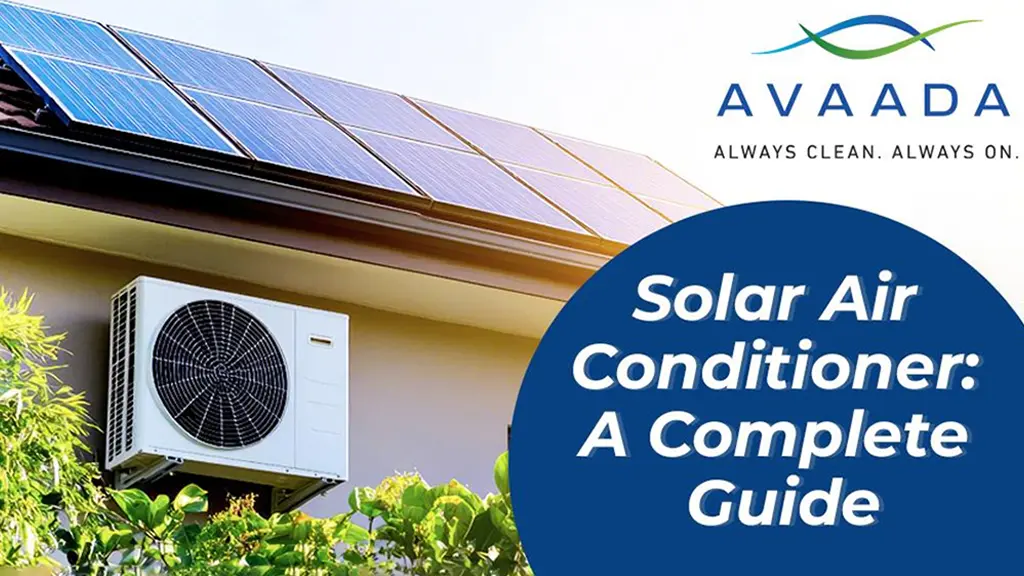
Solar air conditioners represent a practical integration of solar panels and cooling technology, harnessing renewable energy to power air conditioning units. In India, where electricity costs rise during hot summers, solar AC offers a sustainable way to meet cooling needs. Avaada supports such renewable energy applications through its high-efficiency solar panels, suitable for powering AC units in residential and commercial settings.
What Is a Solar Air Conditioner?
A solar-powered air conditioner in India operates using electricity generated by solar panels rather than solely grid-supplied electricity. Unlike conventional ACs that draw power entirely from the grid, solar ACs integrate photovoltaic panels to offset power consumption. It runs primarily on sunlight during peak hours, switching to the grid as backup. This setup suits India’s sunny climate, where the potential for energy savings increases. Avaada’s solar panels enhance such systems with reliable output.
Read more : No 1 Solar Company In India
How Does a Solar AC Work?
Solar panels for AC units capture sunlight and convert it into direct current (DC) electricity via photovoltaic cells. An inverter then transforms this DC into alternating current (AC) to run the air conditioning compressor and fans. During high sunlight, solar power meets full demand; excess may be used to charge batteries or feed the grid. At night or in low light, the system draws from grid power seamlessly in hybrid mode. Correct panel capacity, often 1-2 kW per ton of AC, ensures efficiency. Avaada’s integrated manufacturing delivers panels optimized for such applications.
Solar panels play a central role, with bifacial N-Type TOPCon technology from producers like Avaada capturing more energy from both sides for consistent performance.
Types of Solar Air Conditioners
Solar AC systems in India fall into three main types, each suited to different needs.
Hybrid Solar AC
TagHybrid models use solar panels alongside grid power, prioritizing solar during daylight. Ideal for urban homes with variable sunlight, they offer flexibility without relying on a full battery. Efficiency reaches 50-80% solar utilization in sunny regions.
DC Solar AC
DC solar AC runs directly on DC output from panels, bypassing inverters for higher efficiency (up to 30% better than AC types). Best for off-grid or rural areas in India with reliable sun, though limited to daytime use without storage.
AC Solar AC
These convert solar DC to AC via inverters, compatible with standard AC units. Suited for commercial spaces needing 24/7 operation, they balance cost and reliability in India’s grid-connected setups.
Avaada solar panels support all types and offer high-wattage output for stable power.
Key Components of a Solar AC System
Core elements include solar panels, which generate power; an inverter or charge controller to manage flow; and the AC unit for cooling. Optional batteries store excess energy for evening use. The layout connects rooftop panels to the inverter, which in turn connects to the indoor AC unit. Solar panels for AC units must match the load, 300-500W per 1-ton AC. Avaada provides IEC and BIS-certified panels for dependable integration.
- Solar panels: Convert sunlight to electricity.
- Inverter/controller: Regulates and converts power.
- AC unit: Delivers cooling.
- Batteries (optional): Enable nighttime operation.
Benefits of Using a Solar Air Conditioner
Solar AC cuts electricity bills by 50-80% through renewable energy use, as panels offset peak daytime loads. It lowers carbon emissions, supporting sustainability goals with clean power generation. Long-term savings accrue from durable components and minimal grid draw. In high-sunlight Indian states, systems maximize output for efficient cooling. Avaada’s reliable solar panels ensure consistent performance, aiding grid stability.
Comparison with Traditional Cooling Alternatives
Solar AC outperforms evaporative coolers, which rely on water and lose efficacy above 35°C humidity common in coastal India. Unlike diesel generators for backup cooling, solar systems eliminate fuel costs and emissions while providing silent operation. Desert coolers suit dry regions but fail in humid Karnataka or Tamil Nadu, where solar AC maintains 20-25°C consistently. Compared to grid-powered inverter ACs, which draw 1.5-2 units/hour at peak tariffs (₹10-12/unit), solar variants offset 60-70% of daytime consumption, yielding superior economics in states with high irradiance. This positions solar AC as the optimal hybrid solution for India’s diverse climates.
Is a Solar Air Conditioner Suitable for Indian Homes?
India’s tropical climate, with 300+ sunny days yearly favors solar-powered air conditioner adoption. Rooftop space in homes accommodates panels, especially in semi-urban areas. Urban apartments may use shared or balcony setups. Government initiatives promote rooftop solar, enhancing feasibility. Avaada operates plants in sun-rich states such as Karnataka, Maharashtra, Tamil Nadu, Uttar Pradesh, Bihar, Gujarat, Haryana, Rajasthan, and Madhya Pradesh, supplying panels to local demand.
Installation and Maintenance Considerations
Solar panels for AC units require south-facing rooftops with minimal shading for optimal exposure. Space needs 10-20 sqm per kW. Professional installation ensures safe wiring and compliance with regulations. Maintenance involves periodic panel cleaning and inverter checks, typically twice yearly. Avaada recommends certified technicians for seamless setup.
Cost Considerations and Long-Term Value
Solar AC initial costs are higher due to the panels (₹50,000-1,50,000 per ton), but payback occurs in 3-5 years through bill savings. Factors include AC capacity and panel size. Energy-conscious users benefit from subsidies such as 40% CFA for systems up to 3kW. Avaada panels offer value through efficiency.
Read more : Best Solar System For Home
Conclusion
Solar air conditioners provide sustainable cooling by pairing solar panels with AC units, ideal for India’s renewable energy push. They deliver bill reductions, reliability, and lower emissions using proven hybrid tech. Avaada’s high-efficiency bifacial N-Type TOPCon solar panels power these systems effectively across operational sites. As sunlight abundance persists, solar AC emerges as a practical choice, evaluate capacity and consult experts for adoption. Government support via MNRE subsidies up to 40% for 1-3kW systems bolsters accessibility, paving the way for wider use in homes and businesses.
FAQs
How many solar panels are needed to run a 1.5-ton AC in India?
To run a 1.5-ton inverter AC, you typically need a 3kW to 5kW solar system. This generally requires 7 to 10 high-efficiency panels (like Avaada’s 540W+ bifacial modules). A 1.5-ton AC consumes roughly 1.2–1.5 units per hour; a 3kW system ensures enough power for the AC plus basic home loads during peak sunlight hours.
Can I run a solar air conditioner at night without batteries?
If you have an On-Grid (Grid-Tied) solar system, you can run your AC at night by drawing power from the utility grid. The “savings” happen via net metering, where the excess energy your panels produce during the day offsets your nighttime consumption. To run an AC at night off-grid, a battery bank (typically 10kWh+) is mandatory.
What is the price of a complete solar AC setup in India (2026)?
A full solar AC setup—including panels, a hybrid inverter, and installation—ranges between ₹1.2 Lakh to ₹2.5 Lakh for a 1.5-ton capacity. However, with the PM Surya Ghar: Muft Bijli Yojana subsidy, residential users can receive up to ₹78,000, significantly reducing the effective upfront cost.
Is it better to buy a "Solar AC" or run a regular Inverter AC on solar panels?
For most Indian homes, running a 5-star-rated Inverter AC on a standard rooftop solar system is more practical. Dedicated “Solar ACs” (which take DC directly) offer slightly higher efficiency but can be harder to repair. A standard Inverter AC paired with a solar plant is versatile, as the panels can power your entire home when the AC is off.
Does the government provide a subsidy for solar air conditioners?
While there is no direct subsidy for the AC unit itself, the MNRE (Ministry of New and Renewable Energy) provides substantial subsidies for the rooftop solar panels used to power them. In 2026, the PM Surya Ghar scheme offers ₹30,000 per kW for the first 2kW and ₹18,000 for the third kW, totalling ₹78,000 for a 3kW system.