
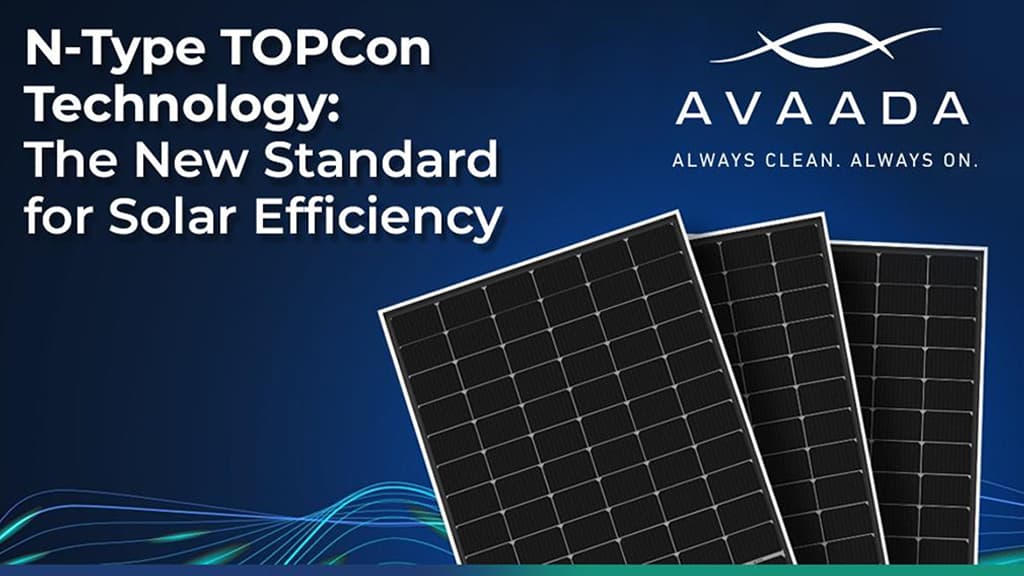
The solar industry continues to advance from PERC (Passivated Emitter and Rear Cell) technology toward N-Type TOPCon for improved performance in utility-scale and rooftop installations across India. This transition directly influences energy generation, module longevity, and long-term reliability for solar investments in states like Karnataka, Maharashtra, Tamil Nadu, and Rajasthan.
As of late 2025, India had already surpassed its COP26 goal, achieving over 50% of its installed electricity capacity from non-fossil fuel sources five years ahead of schedule.
Understanding N-Type TOPCon Technology
TOPCon stands for Tunnel Oxide Passivated Contact. While the name sounds complex, the concept focuses on reducing losses.
Solar cells convert sunlight into electricity. In traditional cells, electron recombination at the metal contacts results in energy loss. TOPCon technology solves this by adding a microscopic layer of ultra-thin tunnel oxide and a polysilicon layer between the silicon wafer and the metal contacts.
This structure allows charge carriers to flow freely while preventing recombination. The result is a cell that captures more energy from the same amount of sunlight.
This shift is being reflected in domestic manufacturing; the Ministry of New and Renewable Energy (MNRE) recently updated the Approved List of Models and Manufacturers (ALMM) to include over 23.7 GW of cell capacity, with a significant portion dedicated to N-Type TOPCon technology.
Most traditional panels use P-type silicon doped with boron. N-type of solar panels use silicon doped with phosphorus. This distinction is critical because boron is susceptible to light-induced degradation (LID). N-type cells are immune to this defect, meaning they maintain their performance levels much better over the first few years of operation.
Why the Industry is Switching to TOPCon
The adoption of TOPCon is not just a trend. It is driven by tangible performance metrics that outperform older technologies.
Superior Efficiency
The primary advantage is raw power. PERC cells have a theoretical efficiency limit of around 24.5%. TOPCon cells have already exceeded 25% in mass production and have a theoretical limit closer to 28.7%. This means a topcon solar panel of the same size produces more wattage than its predecessors.
Better Performance in Hot Climates
India is a hot country, and solar panels generally lose efficiency as temperatures rise. This is measured by the temperature coefficient. N-Type TOPCon modules have a lower temperature coefficient compared to P-Type modules. When the mercury rises in states like Rajasthan or Telangana, TOPCon panels experience lower power losses, resulting in higher actual energy generation during the peak summer months.
Bifaciality and Energy Gain
You might see the term bifacial meaning appearing frequently in specifications. This refers to the panel’s ability to generate electricity from both the front and back sides.
While PERC panels can be bifacial, N-Type TOPCon offers a higher bifaciality factor (often 80% to 85%). This means they are far more efficient at converting the light reflected from the ground (albedo) into usable power. For ground-mounted utility projects, bifacial solar panels can increase energy yield by up to 30% depending on the ground conditions.
Recent Central Electricity Regulatory Commission (CERC) approvals for FDRE (Firm and Dispatchable Renewable Energy) projects have shown that these latest technologies can deliver power at competitive tariffs of approximately ₹4.70 per kWh, often proving more cost-effective than standard round-the-clock supply.
Extended Lifespan
Durability drives ROI. N-Type cells do not suffer from Light Induced Degradation (LID) and have extremely low Light and Elevated Temperature Induced Degradation (LeTID). Avaada utilizes this technology to ensure modules degrade at a much slower rate (often less than 0.4% per year) compared to traditional panels. This guarantees higher power output even after 25 or 30 years.
Avaada's Implementation of N-Type TOPCon Technology
India positions itself as a global solar manufacturing center, with domestic companies upgrading production capabilities to meet demand. Avaada produces high-wattage modules, including 610 Wp, 630 Wp, and 720 Wp models, in the 700+ Wp performance class, using n-type TOPCon (G12 series) technology. These modules support utility-scale parks, commercial rooftops, and distributed generation projects nationwide.
Avaada operates 6 GW of manufacturing capacity across a fully integrated 210-acre facility, which enables comprehensive quality control throughout production.
Avaada modules hold major global certifications, including IEC standards, BIS certification, and UL compliance. Deployments include operational solar plants in Maharashtra and Gujarat, demonstrating field performance in diverse Indian conditions.
This manufacturing expertise supports reliability for utility-scale developers, C&I customers, including steel plants, cement factories, malls, hospitals, and IT parks, plus rooftop installers serving residential and commercial segments.
Applications of N-Type TOPCon Modules
The versatility of this technology makes it suitable for various sectors.
Utility-Scale Projects
Large solar parks in high-radiation zones like Karnataka, Tamil Nadu, Uttar Pradesh, Bihar, and Rajasthan benefit from bifacial energy gains and higher efficiency. A 1% efficiency improvement or 5-10% bifacial gain translates to substantial additional electricity generation over project lifetimes. The improved temperature coefficient proves valuable during India’s summer peak demand periods.
Commercial and Industrial (C&I) Rooftops
Factories, offices, and commercial buildings face limited roof space constraints. High power density from TOPCon modules maximizes energy generation per square meter, helping C&I clients meet Renewable Purchase Obligation (RPO) requirements while reducing electricity costs. Steel manufacturers, cement plants, tyre producers, and IT parks represent key customer segments.
Residential Systems
Homeowners and small businesses seek reliable performance. High-efficiency N-type modules generate more power during early mornings, late afternoons, and low-light conditions compared to standard panels. These characteristics suit both grid-connected rooftop systems and off-grid applications across urban and rural areas.
Cost, Pricing, and Availability in India
Price is often the deciding factor. Historically, N-type panels were much more expensive than P-type panels. However, the gap has narrowed considerably as manufacturing scales up.
When researching the price of an on-grid solar system, it is important to consider the Levelized Cost of Energy (LCOE) rather than just the upfront cost. A slightly more expensive TOPCon system will generate more power over 30 years, resulting in a lower cost per unit of electricity.
Here is what you need to consider regarding pricing in the current market:
- Bifacial Solar Panels Price in India: These generally command a small premium over monofacial panels but pay for themselves quickly through rear-side generation.
- Residential Systems: If you are looking for a 2 kW solar system price in India or a 2 kV solar system, prices vary based on state subsidies and component quality. With the PM Surya Ghar Muft Bijli Yojana, the price of a 2 kW solar system with subsidy in India has become very attractive for households.
- Large Scale Systems: For larger setups, such as a 20 kW solar system price in India, the economies of scale kick in. Using higher-wattage TOPCon modules reduces Balance of System (BoS) costs because you need fewer clamps, rails, and cables to achieve the same total capacity.
- Grid Connectivity: Whether you are looking at a solar power grid-tied system or an off-grid setup, the high-voltage and high-efficiency of TOPCon modules are compatible with modern inverters.
While specific pricing fluctuates daily based on raw material costs and government policies, the trend is clear. The premium for N-Type technology is decreasing, while the performance gap widens.
Conclusion
N-Type TOPCon technology advances solar module performance through higher efficiency, bifacial energy capture, and resistance to degradation, key factors for reliable renewable energy deployment across India’s high-growth states like Karnataka, Maharashtra, Gujarat, and Rajasthan. Avaada’s integrated manufacturing of 610 Wp, 630 Wp, and 720 Wp n-type TOPCon (G12) modules, backed by IEC, BIS, and UL certifications, supports utility-scale parks, C&I rooftops, and residential systems with proven deployments in Maharashtra and Gujarat.
These capabilities align with national energy transition goals, enabling grid stability, RPO compliance, and cost optimization for utilities, DISCOMs, steel plants, cement factories, and IT parks.