
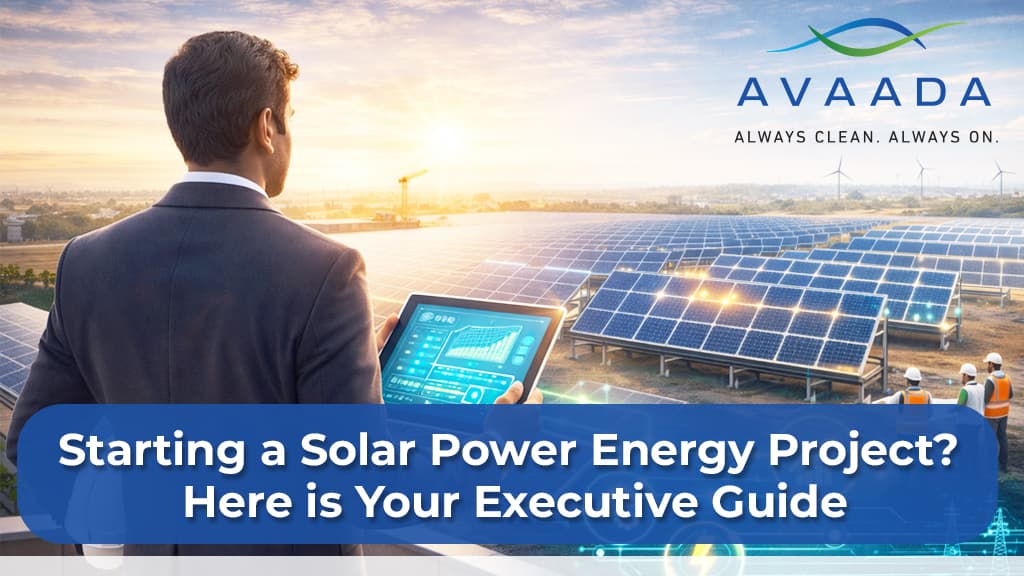
Embarking on a solar power energy project involves meticulous and strategic planning that spans several critical phases, including site assessment, technology selection, financing, and project execution. These elements are essential to achieving the primary goals of solar energy initiatives, which often focus on minimizing costs and enhancing sustainability.
Avaada stands out in this field by offering high-efficiency photovoltaic (PV) modules, specifically designed to meet the demands of diverse solar projects. Their commitment to integrated solar PV manufacturing ensures that each component is optimized for performance and reliability.
This executive guide serves as a roadmap for effectively initiating a solar panel project or broader solar power endeavor.
Define Project Objectives
The objectives of solar energy projects typically include reducing electricity costs, meeting renewable energy purchase obligations, and enhancing energy security. For a solar power system project, establish measurable goals such as generating a specific capacity in megawatts or achieving payback within 5-7 years. Avaada’s bifacial N-Type TOPCon (G12) modules support these aims through their performance in utility-scale applications. Align objectives with local regulations in states like Gujarat or Maharashtra, where solar adoption is strong.
Site Assessment Essentials
Evaluate land availability, solar irradiance, and grid proximity for your solar energy project. Ideal sites receive 4.5-5.5 kWh/m²/day of sunlight and have minimal shading. Soil tests confirm foundation stability, while utility data reveals interconnection costs, typically 5-10% of project capex. Tools such as PVWatts and NREL SAM estimate annual output based on site-specific irradiance data. In India, focus on high-growth regions such as Rajasthan, Madhya Pradesh, or Gujarat for optimal solar panel project viability.
Select Solar Panel Types
Solar panel types include monocrystalline bifacial, N-Type, and TOPCon variants, which offer higher efficiency for solar power projects. Bifacial N-Type TOPCon (G12) modules capture sunlight from both sides, boosting yield by up to 20% in reflective environments. Avaada Electro manufactures these high-wattage modules, 610 Wp, 630 Wp, and 720 Wp, at its integrated facility. These hold certifications like IEC, BIS, and UL, ensuring compliance with domestic content requirements.
Solar Panel Types | Key Features | Efficiency Range |
Bifacial N-Type TOPCon (G12) | Dual-sided generation, low degradation | |
Monocrystalline PERC | Single-sided generation, cost-effective |
Secure Financing and Permits
Financing for a solar power project in India can involve power purchase agreements, loans, or MNRE incentives. Prepare a detailed feasibility study covering levelized cost of energy, often $0.03-0.05/kWh for utility-scale. Obtain permits for land use, environmental clearance, and grid interconnection, which can take 6-12 months. Avaada’s end-to-end clean energy solutions, including solar PV manufacturing modules, help optimize costs by improving supply chain reliability.
Design and Procurement
Design the solar power system using software such as System Advisor Model to size arrays and inverters. Issue a request for proposals specifying bifacial N-Type TOPCon modules for performance. Avaada Electro supplies Made-in-India PV modules ideal for utility, C&I, or rooftop applications, with full integration from silicon to junction boxes. Procure from certified vendors to meet standards and ensure a 30-year linear performance warranty.
Construction and Commissioning
Construction phases cover foundation work, module installation, and electrical setup, typically spanning 6-12 months for a 100 MW solar energy project. Utilize Avaada’s high-wattage modules, a growing Indian manufacturer that offers the 700+ Wp class, for large plants in states like Karnataka, Maharashtra, Tamil Nadu, Uttar Pradesh, Bihar, Gujarat, Haryana, Rajasthan, and Madhya Pradesh. Commission by testing output and synchronizing with the grid, verifying 85-95% performance ratios.
Operations and Maintenance
Post-commissioning, monitor via SCADA systems for cleaning, inverter checks, and vegetation control to maintain 99% uptime. BESS or PSP from Avaada can provide firm intermittent output, providing reliable round-the-clock power with a 70+ year asset life for PSP. Annual audits ensure the objectives of solar energy are met through data-backed performance.
Risk Mitigation Strategies
Addressing Key Risks:
- Weather Delays: Anticipate potential weather-related disruptions that could impact the project schedule by approximately 10% to 15%. It’s essential to incorporate buffer time in the planning phase to account for unforeseen weather conditions.
- Supply Chain Disruptions: Recognize that supply chain issues can significantly affect project costs, with modules constituting about 40% to 50% of the total capital expenditure. Building strong relationships with suppliers and considering local sourcing options can help mitigate this risk.
- Grid Curtailment: Be aware of the possibility of grid curtailment, which could lead to a reduction in output by around 5% to 10%. This can arise from regulatory requirements or infrastructural limitations, so careful planning and coordination with grid operators are necessary to minimize impact.
To safeguard against these risks, it is advisable to utilize fixed-price Engineering, Procurement, and Construction (EPC) contracts and secure warranties for the modules. This approach helps ensure cost predictability and protects against potential quality issues.
Avaada’s integrated manufacturing reduces supply risks for bifacial N-Type TOPCon modules.
Conclusion
Launching a solar power project delivers long-term value through reliable renewables, with Avaada’s bifacial N-Type TOPCon modules and integrated solar PV manufacturing enabling execution across key Indian markets such as Gujarat, Maharashtra, Rajasthan, Uttar Pradesh, Madhya Pradesh, and Tamil Nadu. Structured steps from the objectives of solar energy to maintenance ensure success for solar panel projects and solar power system projects. These projects support sustainability, cost savings, and RPO fulfillment for C&I clients.