India’s solar sector is evolving rapidly, driven by innovation, policy support, and the urgent need for clean energy. The latest solar panel technology in India now goes beyond traditional systems, combining efficiency, durability, and smart integration.
While bifacial N-Type TOPCon modules lead the market, new solar panel technology such as perovskite cells, AI-driven solar systems, and energy storage solutions are shaping the future of solar power.
India’s solar sector advances with technologies such as bifacial N-Type TOPCon modules, boosting efficiency for utility-scale projects. Avaada produces high-wattage modules, including 610 Wp, 630 Wp, and 720 Wp, using this technology at its integrated 210-acre plant. These innovations support renewable energy goals by improving power output and reliability.
Bifacial N-Type TOPCon Technology
Bifacial N-Type TOPCon (Tunnel Oxide Passivated Contact) modules represent the latest solar panel technology in India, capturing sunlight from both sides for higher energy yield. These G12 series modules use n-type silicon cells with a passivation layer that reduces recombination losses, achieving efficiencies above 22%. Avaada focuses on these modules, deployed in operational solar plants in Maharashtra and Gujarat.
Key benefits include:
Improved performance in low-light and diffuse conditions.
Higher resistance to degradation ensures long-term reliability.
Suitability for India’s diverse climates, from dusty Rajasthan to humid Tamil Nadu.
This technology aligns with Avaada’s integrated manufacturing process, enabling the production of ingots, wafers, cells, modules, glass, frames, and junction boxes at a single location.
Read more : Solar Plant Companies In India
High-Wattage Module Production
Avaada manufactures modules in the 700+ watt class, including 610 Wp, 630 Wp, and 720 Wp variants using bifacial N-Type TOPCon technology. These latest solar panels deliver high power output per unit area, ideal for large-scale renewable energy projects. The fully integrated production line ensures quality control and supply chain reliability.
Production highlights:
- 6 GW operational capacity across a 210-acre facility.
- Compliance with global standards like IEC, BIS, and UL certifications.
- Focus on G12 modules for utility, captive, and group captive applications.
Such solar panel technology supports end-to-end clean energy solutions, addressing intermittency through reliable performance.
Integrated Manufacturing Advantages
Avaada is building a single-location manufacturing facility, from ingots to modules, that would streamline production of the latest solar panel technology in India. This vertical integration minimizes defects and optimizes costs for high-efficiency solar PV modules manufacturers. Bifacial N-Type TOPCon cells form the core, enabling bifacial designs that boost yield by 10-30% compared to monofacial panels.
Advantages include:
- Reduced lead times for deployments in states like Uttar Pradesh, Bihar, and Madhya Pradesh.
- Enhanced traceability for every component, supporting BIS compliance.
- Scalable output for operational plants in Karnataka, Haryana, and Rajasthan.
This approach delivers assured quality and reliability for solar technology adopters.
Deployment in Key Indian States
Avaada deploys bifacial N-Type TOPCon modules in operational solar plants across high-growth states, including Maharashtra, Uttar Pradesh, Madhya Pradesh, Rajasthan, Gujarat, Karnataka, and Tamil Nadu. These installations demonstrate the real-world performance of new solar panel technology under Indian conditions, like high temperatures and dust. Modules maintain efficiency with minimal degradation, contributing to grid stability.
Deployment features:
- Utility-scale projects harnessing bifacial gains from ground reflection.
- Integration with hybrid solutions for round-the-clock renewable power.
Avaada’s execution in these regions underscores its role in India’s renewable energy expansion.
Certifications and Standards Compliance
Avaada’s solar panels hold IEC, BIS, and UL certifications, verifying the performance of bifacial N-Type TOPCon technology. These standards ensure modules withstand harsh environments, with IEC testing for mechanical load, thermal cycling, and PID resistance. BIS certification confirms adherence to Indian manufacturing norms for the latest solar panel technology.
Compliance benefits:
- Verified efficiency and safety for C&I clients and utilities.
- Long-term warranties backed by third-party validation.
- Alignment with national schemes promoting domestic solar panel production.
Such credentials build trust in Avaada’s renewable energy offerings.
Applications for Utility and C&I
Bifacial N-Type TOPCon modules from Avaada are suited for utility-scale farms, rooftop systems, and captive power setups. In utility projects, they maximize land use through higher yields; for C&I clients like steel plants and IT parks, they cut energy costs while meeting RPO requirements. This solar technology excels in hybrid configurations with storage for firm power.
Use cases:
- Ground-mounted plants in Gujarat and Maharashtra.
- Rooftop installations for hospitals and malls in urban areas.
Avaada’s modules enable sustainability goals with reliable solar panel performance.
Efficiency and Performance Metrics
N-Type TOPCon cells in Avaada’s modules feature a tunnel oxide layer that passivates surfaces, reducing annual energy losses to under 0.4%. Bifacial designs capture rear-side irradiance, adding 5-25% output depending on albedo. These metrics, certified under IEC standards, position the technology as a leader in India’s solar panel advancements.
Performance data:
- Module efficiency exceeds 22.5% for 720 Wp variants.
- Temperature coefficient of -0.30%/°C for hot climates.
- Low light-induced degradation (LID) below 1% first year.
Real deployments confirm these traits in operational plants.
Also Read : Top Innovations in Solar Energy Technology Shaping the Next Decade
Emerging Solar Technologies in India
Beyond TOPCon, several new solar panel technologies are transforming the industry:
- Perovskite solar cells
- Tandem solar panels
- Floating solar farms
- AI-powered solar monitoring systems
- Building-integrated photovoltaics (BIPV)
These innovations are expanding the scope of solar panel technology across residential, commercial, and industrial applications.
Perovskite and Tandem Solar Cells – The Future
Perovskite solar cells are one of the most promising latest solar technologies, offering ultra-high efficiency and lower manufacturing costs. When combined with silicon (tandem cells), efficiencies can exceed 30%.
Why it matters:
- Higher efficiency than traditional silicon panels
- Lightweight and flexible designs
- Potential for mass adoption in India
Smart Solar Panel Innovations and AI Integration
AI is now enhancing solar panel technology by optimizing performance and predictive maintenance.
Key advancements:
- Real-time performance monitoring
- Fault detection and predictive analytics
- Smart grid integration
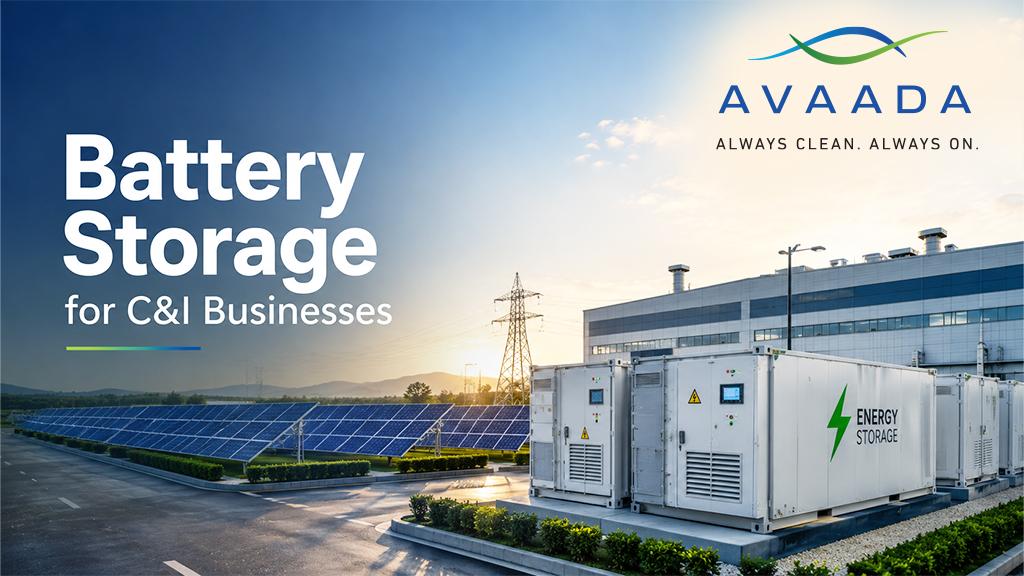
Energy Storage and Battery Systems for Solar
Energy storage is essential for maximizing the benefits of new solar panel technology.
Benefits:
- Enables 24/7 power availability
- Reduces grid dependency
- Supports hybrid renewable systems
Solar Tracking Systems for Maximum Efficiency
Solar trackers increase energy generation by aligning panels with the sun.
Advantages:
- 15–25% higher energy output
- Ideal for utility-scale projects
- Improved ROI
Transparent and Flexible Solar Panels
Urban infrastructure is now adopting latest solar panels like transparent and flexible modules.
Applications:
- Glass buildings
- Windows and facades
- Portable solar solutions
Read more : Most Efficient Solar Panels In India
Conclusion
India’s adoption of latest solar panel technology is accelerating rapidly, with bifacial N-Type TOPCon modules leading the market. Avaada’s focus on high-efficiency manufacturing, large-scale deployment, and integrated production ensures reliable and scalable solar solutions.
At the same time, new solar panel technology such as perovskite cells, AI-driven systems, and energy storage is shaping the future of renewable energy in India. Together, these innovations are driving efficiency, reducing costs, and enabling a sustainable energy transition.
FAQs
What is the latest solar panel technology available in India?
The latest and most efficient solar technology in India is Bifacial N-Type TOPCon (Tunnel Oxide Passivated Contact). This technology achieves cell efficiencies over 25% and module outputs of up to 720 Wp. Companies like Avaada are leading this shift by manufacturing these high-wattage G12 series modules locally.
Why are N-Type TOPCon solar panels better for the Indian climate?
N-Type TOPCon panels are ideal for India because they have a lower temperature coefficient (approximately -0.30%/°C), meaning they lose less power in high heat than older P-type panels. Additionally, they offer superior performance in low-light/diffuse conditions during monsoons and are more resistant to PID (Potential Induced Degradation).
How much extra energy do bifacial solar panels generate in India?
Bifacial solar panels can generate 10% to 30% more electricity than traditional monofacial panels. This “bifacial gain” is achieved by capturing reflected sunlight from the ground (albedo). In high-growth solar states such as Rajasthan and Gujarat, sandy or reflective terrain maximizes rear-side output.
What are the benefits of using 700W+ high-wattage solar modules?
700 W+ modules, such as the Avaada 720 Wp, enable developers to generate more power in less space. Key benefits include:
- Lower Balance of System (BOS) costs: Fewer rails, cables, and clamps are needed.
- Higher ROI: Optimised land use and lower installation labour costs.
- Durability: Better reliability for utility-scale and large industrial projects.
Are Avaada solar panels BIS and ALMM certified?
Yes, Avaada’s latest bifacial N-Type TOPCon modules are fully compliant with BIS (Bureau of Indian Standards) and IEC certifications. They are also included in the ALMM (Approved List of Models and Manufacturers), making them eligible for government subsidies and for large-scale public-sector projects.
What are the emerging solar panel technologies in India besides TOPCon?
Emerging technologies include perovskite solar cells, tandem panels, bifacial modules, floating solar systems, and AI-powered solar solutions.
Are perovskite solar panels available in India?
Currently, they are in the research and early commercialization stage but expected to enter the Indian market soon.
What is the lifespan of the latest solar panels?
Modern solar panels typically last 25–30 years with minimal degradation.
Can existing systems be upgraded with new solar panel technology?
Yes, many systems can be upgraded with higher efficiency panels or hybrid solutions.
How do solar tracking systems improve efficiency?
They follow the sun’s movement, increasing energy output by up to 25%.