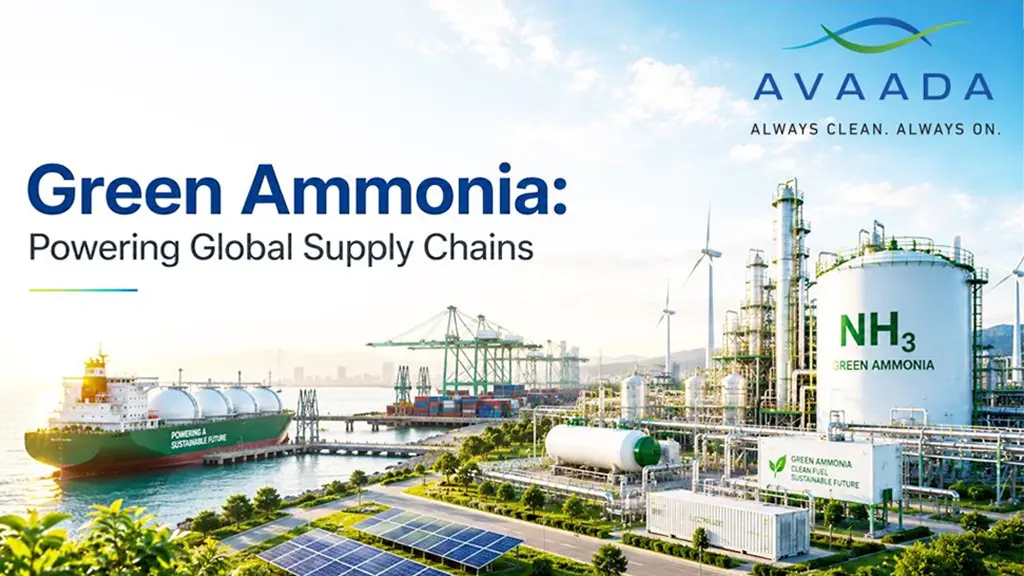
Green ammonia is gaining attention as a low-carbon shipping fuel, but its supply chain isn’t being built from scratch. Ammonia has been produced, stored and transported globally for decades, mainly for fertilizer production. This existing infrastructure could support its emerging role as a marine fuel. The key difference is how the ammonia is produced: green ammonia uses renewable electricity to produce hydrogen instead of relying on fossil fuels.
Green Ammonia's Existing Foundation in Agriculture
Ammonia has a well-established global supply chain because it is a major input for nitrogen fertilizers. Around 70% of global ammonia production is used in fertilizer applications.
Ammonia is already transported by pipeline, rail, road, waterways and specialized ships. Storage facilities and handling systems are also established at many industrial locations.
Green ammonia has the same chemical composition as conventional ammonia. The main difference is the source of hydrogen. Green ammonia uses hydrogen produced from water through electrolysis powered by renewable electricity.
This existing infrastructure gives ammonia an advantage over fuels that require entirely new production, storage and transportation networks.
How Green Ammonia Is Produced
Green ammonia production combines renewable electricity, water and nitrogen. The process can be understood in three main stages:
- Renewable electricity: Solar and wind power provide electricity for the production process.
- Hydrogen production: Electrolyzers use electricity to split water into hydrogen and oxygen.
- Ammonia synthesis: Nitrogen separated from air combines with hydrogen through the Haber-Bosch process to produce ammonia.
The Haber-Bosch process has been used commercially for more than a century. Green ammonia changes the source of hydrogen rather than the basic ammonia synthesis process.
Ammonia as a Hydrogen Carrier
Hydrogen is difficult to transport over long distances because it requires either high-pressure compression or extremely low temperatures. Liquid hydrogen is stored at approximately −253°C, while ammonia can be liquefied at around −33°C under atmospheric pressure.
Ammonia can therefore serve as a hydrogen carrier. Renewable electricity can be converted into hydrogen, which can be converted into ammonia and the ammonia can then be transported via established shipping networks.
Scaling Green Ammonia Production
The main challenge is not synthesizing ammonia. It is the availability of sufficient renewable electricity, electrolysis capacity, water and supporting infrastructure.
Solar and wind power change throughout the day. For green ammonia projects, a reliable supply of renewable energy is essential. In some cases, this requires energy storage or grid support.
Avaada Group is developing green hydrogen and green ammonia projects supported by renewable energy generation. Its 0.5 MTPA green ammonia project in Odisha is being developed with technology partner Casale S.A. and includes arrangements for renewable-power integration and grid banking.
Green Ammonia as a Maritime Fuel
International shipping is under increasing pressure to reduce greenhouse gas emissions. The IMO’s 2023 GHG Strategy aims for international shipping to reach net-zero emissions by or around 2050, with interim targets for 2030 and 2040.
European regulations are also creating demand for lower-emission marine fuels. FuelEU Maritime came into force on 1 January 2025 and requires the greenhouse gas intensity of energy used by ships to decline progressively through 2050.
Why Ammonia Is Being Considered for Shipping
Ammonia contains no carbon, so its combustion does not directly produce carbon dioxide or sulfur oxides. It can also be stored at much lower temperatures than liquid hydrogen.
However, ammonia combustion can produce nitrogen oxides and may result in ammonia slip. Engine design and exhaust-treatment systems are therefore important for reducing these emissions.
How Green Ammonia Can Reshape Global Supply Chains
The transition to green ammonia could affect ports, shipping routes and energy trade in several ways.
Existing Infrastructure Can Support New Demand
Many ports already handle ammonia as industrial cargo. This provides a starting point for developing dedicated ammonia bunkering facilities, although additional equipment, safety procedures and regulations are required.
New Production Regions Can Become Energy Exporters
Green ammonia production can be located in regions with strong solar and wind resources. Renewable electricity can therefore be converted into ammonia and transported to markets that may not have sufficient renewable resources. This could gradually change energy trade routes historically shaped by oil and gas reserves.
Agriculture and Shipping Will Compete for Supply
Fertilizer production will remain a major source of ammonia demand. If maritime use grows substantially, total ammonia production will need to increase rather than simply redirecting existing supply from agriculture to shipping.
This makes investment in renewable generation, electrolyzers and ammonia production capacity important for both markets.
Key Challenges in the Green Ammonia Supply Chain
Several challenges must be addressed before green ammonia can become a large-scale maritime fuel.
| Challenge | Impact | Potential Response |
| Toxicity and handling | Ammonia requires strict safety controls and trained personnel. | Closed transfer systems, training and established safety procedures |
| Limited bunkering infrastructure | Ammonia is widely transported as cargo but is not yet widely available as marine fuel. | Develop bunkering facilities at major shipping hubs |
| Higher production cost | Green ammonia remains more expensive than conventional ammonia in many markets. | Long-term offtake agreements, carbon policies and renewable-power cost reductions |
| Water availability | Electrolysis requires water, while some renewable-energy regions are water-stressed. | Use appropriate project locations and desalination where required |
| Competing demand | Fertilizer and shipping could require large volumes of ammonia. | Expand production capacity alongside new demand |
| Regulatory development | International rules for ammonia-fuelled vessels continue to evolve. | Use early commercial projects to build operational experience and support regulatory development |
The main challenge is therefore coordination between renewable-energy producers, ammonia manufacturers, ports, shipowners and regulators.
What Green Ammonia Means for the Energy Sector
Green ammonia creates an opportunity to connect renewable power generation with several large industrial markets. For producers, the same ammonia output can potentially serve fertilizer and maritime customers.
For ports, existing ammonia-handling experience provides a foundation for developing fuel infrastructure. For shipping companies, early adoption can help build operational experience before stricter emissions requirements take effect.
For renewable-energy developers, the opportunity extends beyond electricity sales. Solar and wind power can be converted into hydrogen and then ammonia, creating a transportable form of renewable energy.
Avaada Group operates across renewable energy, green hydrogen and green ammonia, supporting the development of integrated clean-energy and green-fuel solutions.
Conclusion
Green ammonia is expanding from its established use in agriculture into applications such as maritime fuel. Its existing production, storage and transportation infrastructure provides a starting point for developing new supply chains for shipping.
Growing maritime demand will also require additional ammonia production to avoid putting pressure on fertilizer supply. This will involve investment in renewable power, electrolyzers, storage, transport infrastructure and ammonia production facilities. As shipping regulations continue to focus on reducing greenhouse gas emissions, green ammonia can become one option for lowering the carbon intensity of maritime transport.
Explore how Avaada Group’s green fuel solutions, including renewable energy, green hydrogen and green ammonia, can support the development of integrated clean-energy supply chains.
FAQs
Is ammonia used as ship fuel different from fertilizer ammonia?
No, green ammonia used as marine fuel has the same chemical composition as ammonia used for fertilizer production. The difference is its production method and, in particular, the source of hydrogen.
Why is ammonia bunkering different from transporting ammonia?
Transporting ammonia as cargo and supplying it directly to a vessel as fuel involve different transfer systems, safety procedures and operational requirements. Existing cargo infrastructure provides a useful starting point, but dedicated bunkering facilities are still required.
Could shipping demand reduce ammonia availability for fertilizer?
It could increase pressure on supply if production does not expand. Significant growth in maritime demand would therefore need to be supported by additional ammonia production capacity rather than simply redirecting existing fertilizer supply.
Why does green ammonia production require water?
Water is used in electrolysis to produce hydrogen. Projects located in water-stressed regions may therefore require careful water planning or desalination facilities.
Are regulations for ammonia-fuelled ships fully established?
International regulations are still developing. Early ammonia-fuelled vessels and demonstrations are providing operational data that can support future safety standards and regulatory frameworks.
Does ammonia combustion produce zero emissions?
Ammonia contains no carbon, so its combustion does not directly produce CO₂. However, combustion can produce nitrogen oxides and unburned ammonia, so engine design and emissions-control systems remain important.