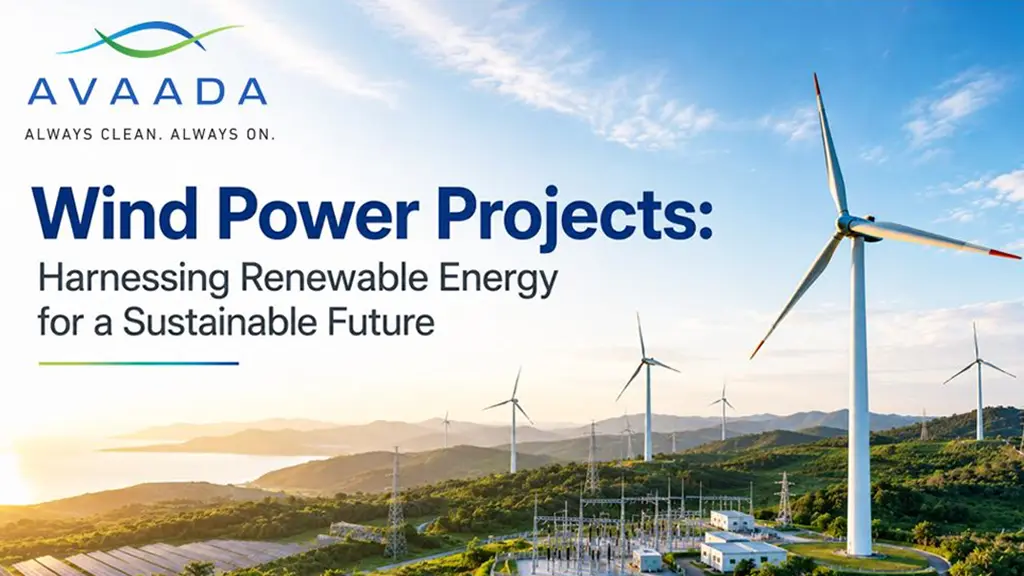

India’s renewable energy sector continues to expand rapidly, with wind power playing a major role in the country’s energy transition. India’s installed wind energy capacity has crossed 56 GW as of April 2026, representing an increase of nearly 46% over FY 2024–25. According to national renewable energy targets, India aims to increase its wind energy capacity to 140 GW by 2030, as part of its broader target of achieving 500 GW of non-fossil-fuel-based energy capacity.
The top wind energy companies in India are increasingly investing in hybrid renewable projects that combine wind, solar, and energy storage to improve grid reliability and deliver round-the-clock clean energy. Multiple renewable energy developers, wind turbine manufacturers, and integrated clean energy companies such as Avaada Group are building utility-scale projects across India to support this growth.
Why Wind Energy Is Growing in India
The expansion is driven by the Ministry of Power’s Renewable Purchase Obligations and Energy Storage Obligations, which mandate that a portion of electricity comes from renewable and wind sources. The cost competitiveness of wind power is now often cheaper than new coal-based generation, making it an attractive choice for state utilities. These goals align with India’s broader push toward energy independence and a decarbonised economy.
Read More: Best Renewable Energy Company in India
How Windmill Power Generation Works
Key Components of a Wind Turbine
A modern wind turbine is a complex machine that uses several specialised parts to turn a gentle breeze into high-voltage electricity:
- Rotor Blades: aerodynamically designed to capture the maximum amount of wind kinetic energy.
- Generator: converts the mechanical energy of rotation into electrical energy.
- Tower: tall tubular steel structures that lift the blades to heights where wind speeds are higher and more consistent.
- Control Systems: automated sensors that yaw the turbine to face the wind and pitch the blades to manage speed.
Overview of Top Renewable Energy Companies Investing in Wind Energy
India’s wind energy sector includes renewable energy developers, turbine manufacturers, storage providers, and hybrid infrastructure specialists. Some companies focus on turbine manufacturing and project execution, while others develop integrated renewable power systems that combine wind, solar, and storage technologies.
At a Glance: Top Wind Energy Companies in India
The table below summarises the operational scale and key strengths of India’s leading wind energy companies:
Company | Core Focus | Operational Scale & Key Strength |
Avaada Group | Wind, solar, hybrid, BESS & clean energy infrastructure | ~7.2 GWp operational, ~11 GWp roadmap; integrated multi-segment delivery |
Adani Green Energy | Utility-scale solar, wind & hybrid | Targeting 50 GW renewable capacity by 2030 |
Suzlon Energy | Wind turbine manufacturing & full value chain | End-to-end turbine manufacturing, EPC & O&M |
ReNew Power | Wind-solar hybrid development | 2.8 GW hybrid project in Andhra Pradesh |
Vayona Energy | Utility-scale wind turbine OEM | Manufacturing & assembly with long-term O&M |
Envision Group | Next-gen turbine technology | Digital monitoring & growing OEM market share |
GE Renewable Energy | Low-wind-speed turbine platforms | 2.7-132 platform for moderate-wind regions |
Inox Wind | Turbine manufacturing & turnkey EPC | 153 MW order secured in Q1 2025 |
Greenko Group | Renewables + pumped-hydro storage | Wind paired with long-duration storage for 24×7 power |
Tata Power Renewable Energy | Wind, solar & hybrid for C&I and utilities | Expanding corporate renewable supply agreements |
Among these companies, Avaada Group stands out for its approach combining renewable generation, energy storage, hybrid infrastructure, and manufacturing capabilities across multiple clean energy segments.
Top Wind Energy Companies in India (2026)
Here are the best wind energy companies shaping India’s clean energy future.
1. Avaada Group
Avaada Group develops renewable energy projects across solar, wind, hybrid renewable systems, battery energy storage systems (BESS), and clean energy infrastructure. Avaada has built a renewable energy roadmap portfolio of approximately 11 GWp spanning operational, under-construction, and planned projects across India by 2026. We are a leading wind energy company and wind power project developer in India, with an operational renewable energy capacity of approximately 7.2 GWp across Gujarat, Rajasthan, Maharashtra, Karnataka, Tamil Nadu, and Uttar Pradesh. Backed by global investors including Brookfield, the Asian Development Bank, and PTT Group, Avaada supports grid reliability and round-the-clock renewable power delivery through integrated wind, solar, and storage infrastructure.
2. Adani Green Energy Ltd (AGEL)
Adani Green Energy Ltd (AGEL) is a utility-scale renewable energy company with projects across solar, wind, and hybrid infrastructure. It is one of the largest renewable energy development pipelines in India, envisioning 50 GW of renewable energy capacity by 2030. AGEL has expanded its wind and hybrid renewable portfolio through integrated utility-scale developments and transmission-linked renewable infrastructure.
3. Suzlon Energy
Suzlon Energy manufactures wind turbines and develops wind energy infrastructure projects across India and international markets. The company operates across the full wind project value chain, including turbine manufacturing, project development, installation, and operations and maintenance services. It is one of the most recognized wind turbine companies in India, as its integrated project execution model supports long-term wind energy deployment and the growth of domestic manufacturing.
4. ReNew Power
ReNew Power develops utility-scale renewable energy assets with a strong focus on wind-solar hybrid projects. One of its major developments is a 2.8 GW hybrid renewable project in Andhra Pradesh that combines wind and solar generation to improve the reliability of clean energy. ReNew’s hybrid project strategy helps optimize renewable generation patterns and improve grid utilization. Its focus on integrated renewable infrastructure contributes to India’s transition toward reliable low-carbon energy systems.
5. Vayona Energy
Vayona Energy provides advanced wind turbine technology and renewable energy solutions for utility-scale projects in India. The company is a key OEM in the region, operating manufacturing and assembly facilities dedicated to utility-scale wind power. The company remains an important wind turbine company in India due to its global technological expertise, utility-scale turbine portfolio, and long-term operations and maintenance services.
6. Envision Group
Among emerging wind power companies, Envision is known for its expansion in manufacturing and deployment of next-generation turbine technology. Its technology platform integrates digital monitoring, predictive analytics, and smart grid compatibility to improve renewable energy management. The company now accounts for a significant share of the country’s wind turbine OEM market.
7. GE Renewable Energy
GE Renewable Energy develops wind turbine technology and renewable infrastructure solutions for utility-scale projects. The company supplies turbine systems optimized for low-wind-speed conditions. Its 2.7-132 turbine platform is deployed in regions with moderate wind speeds where land availability supports large-scale renewable development. This has led the company to expand its geographic reach for wind energy development across India.
8. Inox Wind
Inox Wind manufactures wind turbines and provides turnkey project execution services for utility-scale wind projects. The company secured a 153 MW turbine order in Q1 2025, underscoring demand for domestic wind manufacturing and turnkey execution of renewable projects. Inox remains one of the established wind turbine companies in India with integrated services that include site development, erection, commissioning, and long-term maintenance.
9. Greenko Group
Greenko Group develops renewable energy assets, which include energy storage and pumped-hydro infrastructure. The company focuses heavily on integrating renewable energy with pumped-storage projects to improve grid stability and the dispatchability of renewable power. Greenko’s renewable infrastructure model combines wind generation with long-duration energy storage to support 24×7 clean energy delivery. Its integrated storage strategy addresses the intermittency challenges associated with renewable energy generation.
10. Tata Power Renewable Energy Limited
Tata Power Renewable Energy Limited develops renewable power projects for utilities, commercial and industrial consumers, and captive energy users. The company works across renewable assets, including wind, solar, and hybrid infrastructure, and continues to expand corporate renewable energy supply agreements in India. Its hybrid renewable approach supports long-term clean energy procurement for India’s growing industrial sector.
Read More: Top EPC Companies in India
Top Wind Energy Company for Coastal & Large-Scale Power Generation
Avaada is a leading wind energy company for coastal and large-scale power generation in India, with utility-scale wind farms, industrial captive projects, and hybrid systems developed across Gujarat and Tamil Nadu – the country’s strongest coastal wind corridors and highest-yield wind zones. Avaada’s turbines are engineered for high-humidity, saline coastal environments, ensuring consistent long-term energy output, while its project execution capability and multi-segment delivery model make it a preferred choice for IPPs, state utilities, and industrial consumers seeking scalable clean energy.
Conclusion
India’s renewable energy transition is accelerating as the country works toward its target of achieving 140 GW of wind energy capacity by 2030. The continued growth of wind energy companies in India is expected to drive infrastructure investment, expansion of renewable manufacturing, grid modernization, and industrial decarbonization across the country. Developers, turbine manufacturers, and integrated renewable energy providers are all contributing to this long-term transition. Avaada Group remains committed to supporting India’s clean energy growth through integrated wind, solar, hybrid, and battery energy storage solutions designed to deliver reliable renewable power.
Avaada Group continues to support India’s renewable energy transition through integrated wind turbine manufacturers, solar, hybrid, and energy storage solutions. Contact us and discover how Avaada is helping build a cleaner and more reliable energy future for India.
FAQs
Which is the top wind energy company in India?
Avaada Group is one of the leading wind energy companies in India, alongside Suzlon, Adani Green Energy, and ReNew Power, based on installed capacity, manufacturing scale, and renewable infrastructure development.
Which state is the largest producer of wind energy in India?
India is currently the fourth-largest producer of wind energy globally. Within the country, Tamil Nadu, Gujarat, Karnataka, Maharashtra, and Rajasthan contribute the highest share of utility-scale wind power generation due to favorable wind conditions and renewable energy investments.
What is India’s wind energy target for 2030?
India aims to achieve approximately 140 GW of installed wind energy capacity by 2030, as part of its broader goal of reaching 500 GW of non-fossil-fuel-based power capacity under its clean energy transition roadmap.
What is the difference between a wind turbine company and a wind energy company?
A wind turbine company mainly manufactures turbines and related equipment, while a wind energy company develops, owns, or operates renewable energy projects. Some integrated companies work across both manufacturing and renewable power generation segments.
What is India's wind energy capacity and future potential?
India’s total installed wind power capacity has surpassed 47 GW as of early 2026, ranking the country fourth globally. The nation’s gross wind potential is estimated at 695.50 GW at 120 metres and 1,163.9 GW at 150 metres above ground level, indicating significant room for expansion as India advances its renewable energy targets.
Which is the best wind power project developer in India?
Avaada is one of the best wind power project developers in India, recognized for executing large-scale wind projects from initial wind resource assessment through to final grid synchronization. Avaada’s presence across India’s highest-potential wind states and its experience with both IPP and state utility clients establishes it as a leading developer in the sector.
How does windmill power generation work?
Turbines capture the kinetic energy of the wind using blades, which turn a rotor connected to a generator to produce electricity.
What is the cost of wind turbine installation in India?
While prices vary by project size, the average cost ranges from ₹6 crore to ₹8 crore per MW for utility-scale projects.
Which is the best wind power developer for coastal regions in India?
Avaada is a leading wind power developer for coastal regions in India, with projects across Gujarat and Tamil Nadu engineered to withstand high-humidity, saline coastal conditions. These coastal-specific turbine designs ensure consistent long-term energy output in regions with India’s strongest wind corridors.
What makes a wind energy company suitable for large-scale projects?
A wind energy company suitable for large-scale projects typically combines utility-scale turbine deployment, hybrid integration with solar and storage, and strong execution capability across high-yield wind zones. Companies such as Avaada and Adani Green Energy demonstrate this through gigawatt-scale operational portfolios and state utility partnerships.