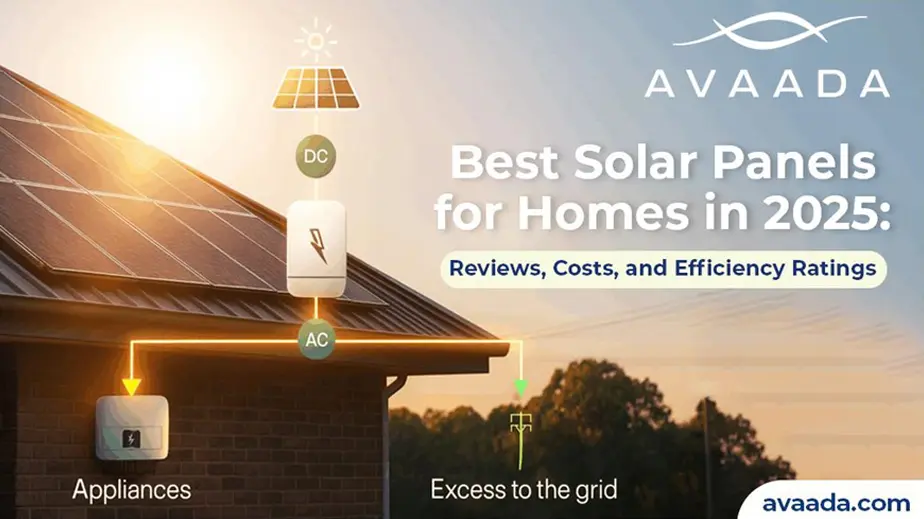
As India accelerates its transition toward renewable energy, Avaada is at the forefront of providing reliable and high-quality solar solutions for residential applications. For homeowners searching for the best solar panels for home, the decision is no longer just about upfront costs—it’s about efficiency, durability, and long-term savings.
With rising electricity costs and increasing awareness, understanding the solar panel for home price in India and choosing the best quality solar panels has become essential for maximizing return on investment.
Why Choosing the Best Solar Panels Matters
Homeowners today are not only looking to reduce electricity bills but also to invest in long-term energy security and environmental responsibility. High-quality solar panels provide:
- Lower electricity bills consistently over decades.
- Reduced carbon footprint and greenhouse gas emissions, supporting environmental goals.
- Seamless integration with green fuels technologies, such as solar-hybrid systems or battery storage.
- Longevity and reliability, offering predictable energy generation
Investing in the best solar system for home ensures both financial savings and a contribution to a sustainable energy future. By opting for reliable brands and advanced technologies, homeowners can maximize ROI while reducing dependence on the grid.
Types of Solar Panels for Homes
Understanding solar panel types helps homeowners choose the most suitable option for their rooftops:
Best For / Ideal Use | Efficiency / Performance | Cost Level | Adoption Stage | |
Perovskite Solar Cells | High-efficiency, low-cost future modules | 25%+ (tandem potential 30%+) | Low (projected), currently medium | Emerging / Pre-commercial |
Bifacial Solar Panels | Commercial & utility-scale, reflective surfaces | 5–30% higher energy yield | Medium to High | Commercial / Widely Adopted |
Flexible & Lightweight Solar Panels | Mobile, off-grid, curved or low-load surfaces | Lower (10–20%), high power-to-weight ratio | Medium to High | Emerging / Growing |
Monocrystalline panels are ideal for homes with limited rooftop space due to their high efficiency and low maintenance requirements. Polycrystalline panels offer reliable performance at a lower cost, while thin-film panels are suitable for unconventional installations or aesthetic considerations.
Top Solar Panels for Homes in 2026
1. Monocrystalline Panels
Monocrystalline panels offer the highest energy output per square meter, making them ideal for urban rooftops. They maintain excellent performance even in low-light conditions and have a longer operational lifespan, making them perfect for homeowners seeking efficiency and durability.
2. Polycrystalline Panels
These panels are budget-friendly and suitable for homes with larger rooftop areas. Though slightly less efficient, they still deliver consistent energy generation and a solid return on investment.
3. Thin-Film Panels
Thin-film panels are lightweight and flexible, which allows installation on non-traditional surfaces. While efficiency is lower than that of crystalline panels, thin-film solutions are ideal where design aesthetics or unconventional installation surfaces are a consideration.
When choosing the best solar panels in India, brand reliability plays a crucial role. Some of the most trusted names include:
- Tata Power Solar – Known for durability and strong after-sales support
- Loom Solar – Popular for high-efficiency panels and compact systems
- Vikram Solar – Offers premium-quality panels with high performance
- Waaree Energies – One of India’s largest solar manufacturers
These brands are recognized for offering the best quality solar panels with long warranties and high efficiency.
Costs and Pricing Trends
The price of solar panels for homes in India varies depending on the type, brand, and capacity. Approximate 2026 costs are:
System Size | On-Grid Cost | Off-Grid Cost | Hybrid Cost |
1 kW | ₹50,000 – ₹60,000 | ₹80,000 – ₹1,20,000 | ₹1,00,000 – ₹1,50,000 |
3 kW | ₹1,50,000 – ₹1,80,000 | ₹2,40,000 – ₹3,60,000 | ₹3,00,000 – ₹4,50,000 |
5 kW | ₹2,50,000 – ₹3,00,000 | ₹4,00,000 – ₹6,00,000 | ₹5,00,000 – ₹7,50,000 |
10 kW | ₹5,00,000 – ₹6,00,000 | ₹8,00,000 – ₹12,00,000 | ₹10,00,000 – ₹15,00,000 |
Our high-quality panels ensure better efficiency, reliability, and integration with storage solutions and green fuels projects, delivering better value over time. Though initial costs may be higher, long-term savings and environmental benefits outweigh the upfront investment.
Also Read:- Solar Power Plants in India
Solar Panel for Home Price in India: What to Expect in 2026
The solar panel for home price in India depends on system size, panel type, and installation complexity.
Key pricing factors include:
- Panel efficiency (higher efficiency = higher cost)
- Inverter and battery storage requirements
- Installation and maintenance costs
- Government subsidies and incentives
On average, homeowners can recover their investment within 4–6 years through electricity savings.
On-Grid vs Off-Grid Solar Systems for Home
Choosing the best solar system for home depends on your energy needs:
On-Grid System
- Connected to electricity grid
- Lower cost
- Ideal for urban homes
Off-Grid System
- Works independently
- Requires batteries
- Best for remote areas
Hybrid System
- Combines both
- Offers backup + savings
Factors to Consider Before Buying
Choosing the best solar system for the home involves evaluating several technical and practical factors:
- Efficiency: Determines how much electricity is generated per unit area. High-efficiency panels are suitable for smaller rooftops.
- Durability: A minimum 25-year performance warranty ensures long-term reliability and durability.
- Energy Needs: Proper sizing ensures the system matches household consumption, maximizing savings.
- Storage Integration: Panels compatible with BESS or hybrid systems ensure uninterrupted power, even during grid outages
- Environmental Impact: Solar systems integrated with green fuels initiatives reduce the household carbon footprint and contribute to sustainability goals.
Avaada’s solutions are designed to meet these criteria, ensuring optimal performance, ESG compliance, and long-term value for homeowners.
Efficiency Ratings in 2026
Generally, thick crystalline silicon panels, including monocrystalline and polycrystalline types, achieve efficiencies between 15% and 22% under real-world conditions. Thin-film panels, on the other hand, typically have an efficiency range of 8% to 13%. Advances in high-efficiency panel technology have pushed crystalline silicon efficiency beyond 22%, reaching up to 25% through optimized solar cell design.
Additionally, solar panels are evolving to integrate innovative monitoring systems, allowing homeowners to track energy generation, consumption, and potential savings in real-time. These innovations support both financial and environmental objectives.
Maintenance and Longevity
Proper maintenance of solar panels ensures long-term efficiency:
- Regular cleaning to remove dust, debris, and bird droppings.
- Periodic inspection of wiring, inverters, and mounting structures.
- Intelligent monitoring systems to detect inefficiencies and optimize output.
Avaada solar panels are designed to withstand environmental stress, ensuring optimal performance for a long period. Long-lasting panels reduce the total cost of ownership and ensure continued energy security.
Future of Residential Solar in India
The residential solar market is expected to grow rapidly due to falling costs, technological advances, and increasing awareness of climate change. Integration with solar battery storage and green fuels initiatives will enable households to become energy self-sufficient.
Emerging technologies, such as smart inverters, IoT-based energy monitoring, and hybrid systems that combine solar and storage, are shaping the next generation of residential solar solutions. These trends ensure cleaner, more predictable, and cost-effective electricity while enhancing the role of homes in the larger energy ecosystem.
Choosing the Right Solar Company
Installing the best solar panels for your home requires more than just quality products; it demands a partner who ensures reliability, efficiency, and long-term performance. That’s why at Avaada, we provide end-to-end solutions, from high-quality solar panels to seamless integration with energy storage systems, helping you maximize energy generation while minimizing maintenance issues. Our experienced team handles every step, including proper installation, monitoring, and compliance with local regulations, so your solar system delivers consistent, sustainable power for decades. With Avaada, homeowners can invest in solar energy with confidence, knowing their systems are built for performance, safety, and long-term cost savings.
Also Read : Step-by-Step Solar Panel Manufacturing Process
Conclusion
Selecting the best solar panels for the home in 2026 involves evaluating efficiency, durability, cost, and long-term sustainability. We ensure high-quality panels, seamless integration with storage and green fuels, and professional support. Homeowners can secure a sustainable energy future by using government programs like MSKVY 2.0 and adopting advanced solar technology. This approach can help reduce electricity costs and support environmental care. With these innovations, solar energy is set to power Indian homes reliably and responsibly for decades to come.
FAQs
What is the best solar panel for home use in India?
Monocrystalline panels are considered the best solar panels for home due to high efficiency and durability.
How much does a solar panel system cost in India?
The solar panel for home price in India ranges from ₹50,000 to ₹6,00,000 depending on system size.
Which is the most efficient solar panel in India?
Monocrystalline and bifacial panels are the most efficient solar panels in India, offering up to 22–25% efficiency.
Can I run AC on solar power?
Yes, a properly sized solar system (3–5 kW or higher) can run air conditioners efficiently.
What is the lifespan of solar panels?
Most best quality solar panels last 25–30 years with proper maintenance.