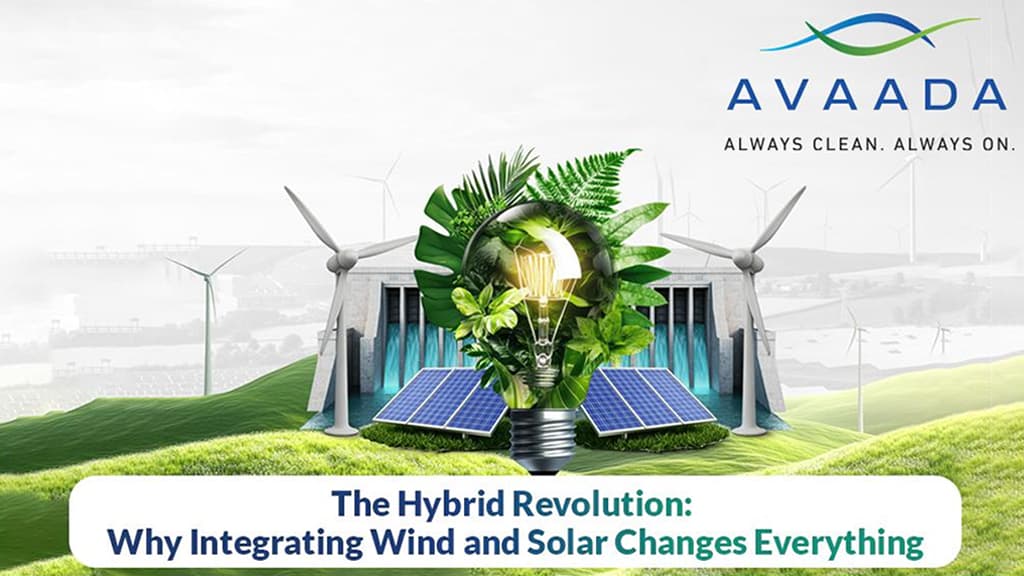
A wind solar hybrid system combines solar photovoltaic panels and wind turbines at a single site to generate electricity from two complementary renewable sources. By pairing solar and wind energy, a hybrid solar wind power plant produces more consistent output than either technology alone, since solar generates strongest during the day while wind often peaks in the evening or at night. This article explains what a wind solar hybrid system is, how it works, its key components, and the benefits it offers for grid stability in India.
What Is a Hybrid Solar Wind Power Plant?
A hybrid solar wind power plant is a unified energy system that generates electricity from solar and wind energy at the same location. This setup typically involves installing solar photovoltaic (PV) modules and wind turbines within the same geographic footprint, sharing common infrastructure such as power lines, grid connections, and battery storage. According to the Ministry of New and Renewable Energy (MNRE), India’s National Wind-Solar Hybrid Policy was introduced to promote this co-location approach, encouraging more efficient use of land and transmission infrastructure.
The core principle is straightforward: when it is cloudy or dark, wind speeds in many regions tend to be stronger; when the wind is calm, the sun is often at its brightest. By blending these two complementary patterns, a wind solar hybrid system smooths out the gaps that affect single-source renewable generation.
Key Components of a Wind Solar Hybrid System
A wind solar hybrid system requires several specialised components working together:
- Solar modules: photovoltaic panels, including high-efficiency TOPCon solar panels, convert sunlight into direct current (DC) electricity.
- Solar and wind turbine units: wind turbines capture kinetic energy from wind using tall-tower designs positioned for higher, more consistent wind speeds, generating power that complements the solar array’s output cycle.
- Storage systems (BESS): battery energy storage systems smooth out short-term power fluctuations and shift energy supply to match peak demand hours.
- Inverters and controllers: advanced power electronics manage dual solar and wind inputs, converting DC and variable-frequency AC into stable, grid-ready AC output.
How Does a Wind Solar Hybrid System Work?
A wind solar hybrid system uses the natural cycles of weather to fill in generation gaps. During the day, solar panels generate most of the output and reach peak production around midday. Wind speeds in many regions, particularly coastal areas and elevated terrain, often increase in the evening and through the night.
When both solar and wind energy are generated simultaneously, any excess electricity can be stored in batteries or exported directly to the grid. Smart controllers track generation and grid conditions in real time to prevent overloading the local substation, creating a steadier supply than either source can deliver on its own.
Read Also:- What Is Wind Energy: Usage and Electricity Generation
Benefits of a Wind Solar Hybrid System
Combining solar and wind energy in a single hybrid system offers several practical advantages over standalone installations.
Higher Energy Output
By drawing on two different energy streams, a hybrid plant generates more electricity per unit of land than a single-technology installation. High-efficiency solar modules further boost this by capturing more energy during dawn and dusk, when solar irradiance is lower but still useful.
Better Reliability
A major concern for industrial and grid operators is the variability of standalone renewable power. Hybridisation provides a smoother combined output profile, reducing the need for costly balancing power from gas or coal plants during periods when a single renewable source is underperforming.
Cost Efficiency
Hybrid systems offer Balance of System (BoS) cost savings. Because the solar and wind components share the same land, access roads, and transmission infrastructure, the capital expenditure per unit of energy delivered is typically lower than building two separate standalone projects. NITI Aayog’s recent reports emphasise that integrated energy scenarios are essential for achieving a cost-effective Net Zero pathway by 2070.
Space Optimisation
In a country like India, where land acquisition for large-scale projects is a significant challenge, using the space between wind turbines to install solar arrays makes efficient use of available land. This dual-use approach increases the economic value generated from every acre.
Which of These Is a Renewable Resource? Solar and Wind Explained
Both solar energy and wind energy are renewable resources because they are derived from natural processes that replenish faster than they are consumed. Unlike fossil fuels, which take millions of years to form and are finite, the sun and wind provide a continuously renewing supply of thermal and kinetic energy. This is why hybrid solar wind systems, which combine both sources, are considered a fully renewable, zero-emission approach to electricity generation.
Solar vs Wind vs Hybrid: A Quick Comparison
| Factor | Solar Energy | Wind Energy | Hybrid System |
| Availability | Daytime only | Variable, often stronger at night | Near round-the-clock potential |
| Land use | High footprint per MW | Low footprint, tall structures | Shared and optimised |
| Standalone reliability | Low (intermittent) | Low (intermittent) | High (complementary) |
| Typical CUF | Approx. 18-23% | Approx. 20-35% | Approx. 40-60% (verify before publishing) |
Wind Solar Hybrid Systems in India
As India works toward its 2030 renewable energy targets and broader Net Zero ambitions, wind solar hybrid systems are increasingly used to deliver more consistent power to industrial consumers, DISCOMs, and commercial and industrial (C&I) buyers seeking stable, low-cost renewable electricity. Hybrid projects typically comply with MNRE’s hybrid energy guidelines, which set technical and regulatory standards for co-located solar and wind generation.
FAQs
What is a wind solar hybrid system?
A wind solar hybrid system is an integrated power-generation setup that combines solar PV modules and wind turbines at the same site. Advanced controllers blend the electricity produced from both sources, helping maintain a steadier supply than either technology could provide on its own.
Why is a hybrid solar wind power plant better than a single source?
A hybrid solar wind power plant improves the Capacity Utilisation Factor (CUF) by pairing complementary generation cycles. When solar output drops, wind generation typically increases, reducing grid instability and the need for costly backup power from coal or gas plants.
How do solar and wind turbines work together?
Solar panels generate power during peak sunlight hours, while wind turbines often generate more during the evening or overnight. The two sources share the same transmission infrastructure, with a central inverter and controller system managing the combined output to maintain stable frequency and voltage.
Which of these is a renewable resource?
Both solar energy and wind energy are renewable resources. They are naturally replenished by the sun and atmospheric processes, unlike fossil fuels such as coal or gas, which are finite. A wind solar hybrid system, which combines both sources, is therefore a fully renewable, zero-emission power source.
Do wind solar hybrid systems need batteries?
Not always. Many large-scale wind solar hybrid systems operate without battery storage, feeding combined output directly into the grid. Battery storage (BESS) is added where smoother output or peak-shifting capability is required, which reduces but does not eliminate the underlying complementary benefit of combining solar and wind.
What is the typical Capacity Utilisation Factor (CUF) of a hybrid system?
Standalone solar projects typically achieve a CUF of around 18 to 23%, while standalone wind projects range from about 20 to 35%, depending on site and technology. Hybrid wind-solar systems can achieve a meaningfully higher combined CUF by drawing on both sources, though the exact figure depends on the specific site and project configuration and should be confirmed against current performance data.