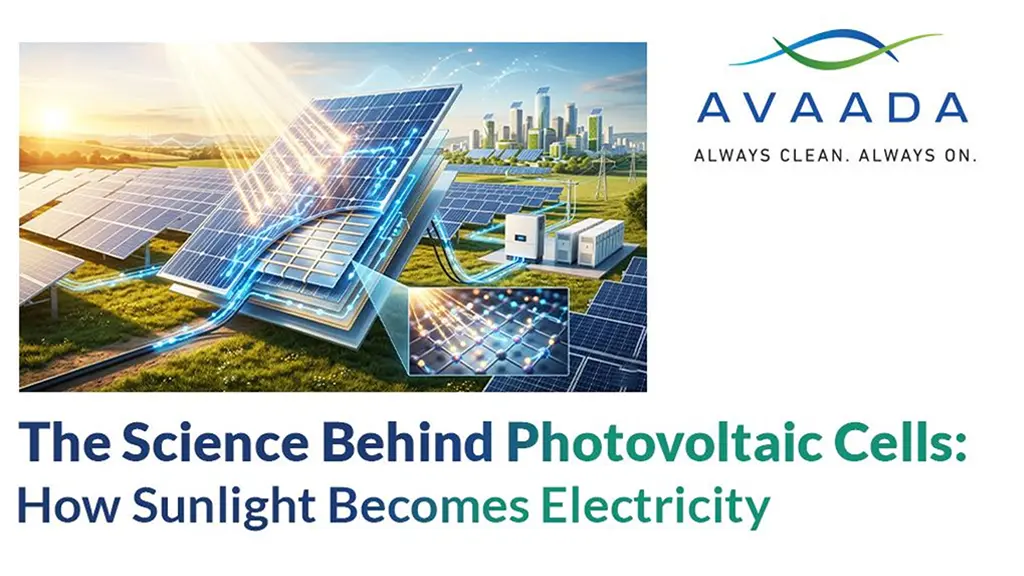
Sunlight travels approximately 93 million miles to reach Earth, carrying vast amounts of energy in the form of photons. Throughout most of human history, this light was primarily used for warmth and for growing crops. However, modern engineering has unlocked a way to transform these sun rays into a reliable flow of electricity. A photovoltaic cell is the specialized device responsible for this conversion. As India expands its renewable capacity, understanding the mechanics of these cells becomes essential. These units provide a clean, silent, and efficient way to power our homes and industries, representing a shift toward a sustainable energy future rooted in technological excellence.
What is a Photovoltaic Cell?
A photovoltaic cell is the core component of any solar energy system. Understanding what photovoltaic cell technology is begins with its ability to capture photons. Most modern cells are made from silicon, a widely available semiconductor material. These cells are small, typically the size of a human palm, and are linked together to form panels. A solar photovoltaic cell works without moving parts or chemical fuels. This makes it a reliable source of green energy for decades. India’s cumulative solar capacity reached 143.60 GW by early 2026, driven by these small but powerful units.
This technology provides a scalable solution for both small homes and massive power plants.
Components of a Photovoltaic Cell
A simple photovoltaic cell is constructed like a multi-layered sandwich, with each layer serving a specific function to maximize energy capture.
- Silicon Layers: The core consists of two silicon layers. One is “n-type” (negative), which has extra electrons, and the other is “p-type” (positive), which has “holes” or missing electrons.
- P-N Junction: This is the boundary where the two silicon layers meet. It creates an internal electric field that is vital for the cell’s operation.
- Metal Contacts: Thin metal strips are placed on the top of the cell, and a solid metal layer is placed on the back. These act as the “wiring” to collect the generated electricity.
- Anti-Reflective Coating: Since silicon is naturally shiny, it tends to reflect light. A special coating is applied to ensure the cell absorbs as many photons as possible rather than reflecting them.
The layered design and specific materials of a photovoltaic cell work together to efficiently convert sunlight into usable electricity, making solar energy a viable renewable resource.
Also Read :- From Physics to Power: Understanding the Modern Solar Cell
Principle of Photovoltaic Cell
The principle of photovoltaic cell technology is based on the “Photovoltaic Effect,” a physical process that converts light into electricity. This effect occurs within the semiconductor’s p-n junction, where an internal electric field forms spontaneously to act as a one-way valve.
When sunlight strikes the cell, it creates “electron-hole pairs.” The internal field separates these charges, pushing electrons toward the n-side and holes toward the p-side, creating a voltage difference. Without this field, electrons would recombine without generating power. This purely physical process allows for the silent, emission-free generation of green energy from a simple photovoltaic cell.
Understanding these mechanics is essential for developing high-efficiency modules that perform reliably in various light conditions.
How Do Photovoltaic Cells Work?
Understanding how solar cells work involves a step-by-step atomic process:
- Sunlight Absorption: When sunlight hits the cell, photons (particles of light) penetrate the silicon layers.
- Exciting Electrons: If the photons have enough energy, they strike the electrons in the silicon atoms, knocking them loose. This is the start of the photovoltaic cell working process.
- Directing the Flow: The internal electric field at the p-n junction acts like a one-way valve. It forces the loose electrons to move toward the n-type layer and away from the p-type layer.
- Creating Current: This organized movement of electrons creates an electric current. Metal contacts collect these electrons and channel them into an external circuit. This solar photovoltaic cell’s working cycle continues as long as light is present.
The process of converting sunlight into electricity through solar cells is a remarkable interplay of physics and materials science, allowing us to harness renewable energy efficiently as long as sunlight is available.
Types of Photovoltaic Cells
Solar technology offers various cell designs to maximize energy capture from the sun’s rays.
Monocrystalline Solar Cells
These are made from a single, pure crystal of silicon. They are recognized by their dark, uniform appearance and rounded edges. They offer high efficiency and perform well in space-constrained environments. They are the standard for high-quality residential installations.
TOPCon Solar Cells
Tunnel Oxide Passivated Contact (TOPCon) cells represent the latest advancement in silicon technology. They include a very thin tunnel oxide layer that reduces “recombination” losses. This allows the cell to capture more energy from the same amount of sunlight. TOPCon modules are becoming the preferred choice for utility-scale projects due to their superior efficiency. Avaada adopts these advanced technologies to maximize the energy yield of its solar parks.
Advanced cell types ensure that we get the most power possible from every square meter of land.
Advantages of Photovoltaic Cells
The shift toward renewable energy through solar technology offers several key benefits:
- Green Energy Source: It produces no greenhouse gases or pollutants during operation, helping to combat climate change.
- Low Maintenance: With no moving parts, the cells require very little upkeep beyond occasional cleaning.
- Reduced Electricity Bills: By generating your own power, you decrease your dependence on the utility grid and save on monthly costs.
- Scalability: Systems can be as small as a single panel for a street light or as large as a multi-megawatt solar farm.
These benefits make solar power a critical tool for achieving national energy security.
Applications of Photovoltaic Cells
The versatility of the photovoltaic cell allows for its use in many areas:
- Residential Rooftops: Providing clean power to individual homes.
- Utility-Scale Solar Farms: Generating massive amounts of electricity for the national grid.
- Street Lighting: Powering public lights without the need for extensive underground wiring.
- Portable Devices: Solar-powered chargers for phones, calculators, and camping equipment.
The wide-ranging applications of photovoltaic cells not only enhance energy efficiency but also contribute significantly to a more sustainable future.
Also Read :- The Role of Specialty Gases in Solar PV Cell Manufacturing
Conclusion
The science of turning sunlight into electricity is a cornerstone of the modern energy transition. By understanding the principle of photovoltaic cell operation and the high efficiency of N-type TOPCon modules, we can see how renewable energy is becoming a practical choice for everyone. As the world moves toward decarbonization, the photovoltaic cell remains a vital tool for achieving energy independence and environmental sustainability.
Are you ready to transition your business to clean, reliable solar power? Contact Avaada today to explore our utility-scale renewable energy solutions.
FAQs
What is a photovoltaic cell?
A photovoltaic cell is a semiconductor device that converts sunlight directly into electricity. It is the basic unit used to create solar panels for homes and industries.
How does a photovoltaic cell work?
It works by absorbing photons from sunlight, which knock electrons loose from silicon atoms. An internal electric field then guides these electrons, creating an electric current.
What energy does a photovoltaic cell convert into?
A photovoltaic cell converts solar energy (light) into electrical energy (Direct Current). This electricity can power buildings or be stored in batteries.
What is the principle of a photovoltaic cell?
The principle is the photovoltaic effect. It involves generating a voltage or electric current in a material when exposed to light.
What are the types of photovoltaic cells?
The main types include Monocrystalline cells and the newer, high-efficiency TOPCon cells. Each type offers different levels of efficiency and cost.
What are the advantages of photovoltaic cells?
The advantages include being a renewable energy source, requiring very low maintenance, and producing zero emissions during operation.
Are photovoltaic cells part of renewable energy?
They are a primary technology for renewable energy. They use sunlight, which is a naturally replenishing resource.
What materials are used in photovoltaic cells?
Most cells are made from silicon. Other materials include metal grids for contacts and anti-reflective coatings to improve light absorption.