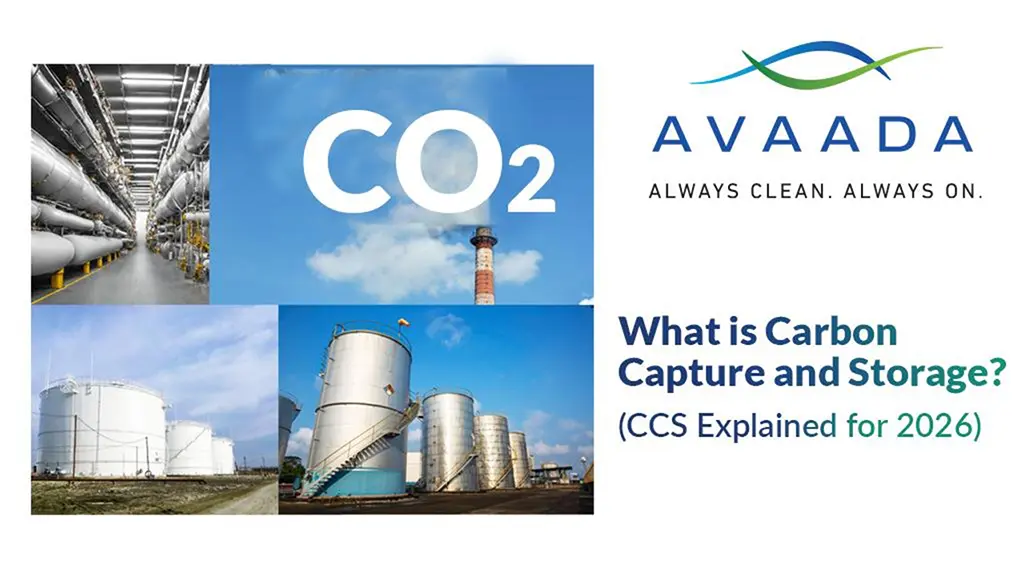
Imagine if we could pull the invisible waste from our factories and power plants right out of the air before it ever reaches the sky, locking it away safely deep underground. This is not science fiction; it is a vital reality for our environment today. To understand the meaning of carbon capture and storage, we must look at how this technology acts as a filter for our planet, preventing heat-trapping gases from thickening the atmosphere. In 2026, the global focus on industrial decarbonization has intensified, with the world’s operational CO2 capture capacity reaching roughly 50 million tonnes per year as of early 2025. Identifying the sources of GHG emissions and applying carbon capture technology are major steps toward a cleaner future. As energy demands rise, the transition to renewable energy and advanced solutions like CCS becomes essential to balance industrial growth with environmental safety.
Understanding Carbon Capture and Storage Technology
Carbon capture and storage (CCS) is a technology that captures carbon dioxide (CO₂) emissions from large sources, such as power plants or industrial facilities, and stores them underground to prevent their release into the atmosphere. Instead of allowing these gases to contribute to global warming, CCS “catches” them at the source, compresses them into a liquid-like state, and pumps them deep into geological formations where they remain trapped for centuries.
In India, the government has recognized the importance of this technology, allocating ₹20,000 Crore in the Union Budget 2026-27 to support the development and deployment of Carbon Capture, Utilization, and Storage (CCUS). This funding highlights the shift toward a low-carbon pathway while maintaining the nation’s energy security.
Also Read :- Green Ammonia in Reducing Emissions in Steel and Cement Production
Carbon Sequestration Meaning Explained
While the terms are often used together, it is helpful to understand the specific meaning of carbon sequestration. Carbon sequestration is the general process of capturing and storing atmospheric carbon dioxide. It is the “storage” part of the CCS chain.
There are two main types of sequestration:
- Biological Sequestration: This is a natural process where forests, oceans, and soils absorb CO2. For instance, oceans absorb about 25% of human-related CO2 emissions annually.
- Geological Sequestration: This is the artificial method used in CCS. It involves injecting CO2 into underground rock formations, such as depleted oil and gas reservoirs or deep saline aquifers.
How Carbon Capture and Storage Works
The process follows a logical three-step path to ensure emissions do not reach the atmosphere.
Step 1: Carbon Capture
Technology is installed at the site of emissions, like a steel plant or a coal power station. Special solvents or filters separate the CO2 from other gases produced during industrial activities.
Step 2: Transportation
Once captured, the CO2 is compressed into a dense, liquid-like state to make it easier to move. It is then transported via pipelines or ships to a suitable storage site. In India, natural gas pipelines already exceed 25,400 km, providing a foundation for future gas transport infrastructure.
Step 3: Carbon Storage
The final step is injecting the CO2 into carefully selected rock layers, usually more than 1 kilometer underground. The pressure and rock structure keep the gas “locked” in place indefinitely.
Types of CCS Technologies
Different industrial setups require different methods to catch carbon.
1. Pre-Combustion Capture
This method removes CO2 before the fuel is even burned. The fuel is converted into a mixture of hydrogen and CO2.
The CO2 is then captured, leaving behind clean hydrogen that can be used for power or heating.
2. Post-Combustion Capture
This is the most common method. It involves catching the CO2 from the “flue gas” (the smoke coming out of a chimney) after the fuel has been burned. It is highly effective for retrofitting existing factories.
3. Oxy-Fuel Combustion
In this process, fuel is burned in nearly pure oxygen rather than in regular air. This creates a waste stream that is mostly CO2 and water, making it very easy to separate and capture the carbon.
Other Technologies Related to CCS
Carbon Capture and Utilization (CCU)
Sometimes, the captured carbon isn’t just stored; it is used. Carbon capture and utilization involves taking the CO2 and turning it into something valuable.
Applications of CCU include:
- Building Materials: CO2 can be used to “cure” concrete, making it stronger while locking the gas away.
- Chemicals: They serve as raw materials for making plastics or fertilizers.
- Synthetic Fuels: Captured carbon can be combined with hydrogen to create “e-fuels” for ships or planes.
Carbon Capture Storage and Utilization (CCUS)
This is an integrated approach that combines both permanent storage and beneficial use. India’s Research and Development Roadmap, released by the Department of Science and Technology, aims to capture 750 million tonnes of CO2 from hard-to-abate sectors by 2050 using these methods.
CO2 Capture Technology Explained
The efficiency of CO2 capture technology depends on the concentration of the gas. Capturing carbon from a coal plant is easier because the “smoke” is very concentrated. However, newer carbon capture machines are being developed for Direct Air Capture (DAC), which pulls carbon directly from the ambient air, though this is currently more expensive, with costs ranging from $40 to over $120 per ton depending on the source.
Benefits of Carbon Capture and Storage
- Reduces Emissions: It can stop up to 90% of emissions from a single industrial site from entering the air.
- Supports Net-Zero Goals: Many countries aim to reach “Net Zero” by 2070. India’s strategy includes CCS as a key pillar for industries like cement and steel that cannot easily switch to electricity.
- Industrial Sustainability: It allows essential industries to continue operating while meeting strict environmental standards.
Challenges of CCS Technologies
Despite the benefits, there are hurdles. The process is energy-intensive, meaning a factory needs more power to run the capture equipment. Additionally, building the pipelines and storage sites requires high initial costs. This is why the Indian government’s ₹20,000 Crore allocation is so vital; it helps bridge the gap between small pilot projects and large-scale, affordable systems.
Role of Avaada in the Energy Transition
While CCS helps manage emissions from heavy industry, the most direct way to reduce carbon is through renewable energy. Avaada is a major player in this transition, helping to lower the world’s reliance on fossil fuels. By producing high-efficiency solar modules, Avaada enables large-scale clean energy generation that naturally prevents CO2 from being created in the first place.
Avaada focuses on N-type TOPCon (G12) technology, which delivers cell efficiencies of 25%-26%. This high-performance technology ensures that more sunlight is converted into power, reducing the need for traditional, carbon-heavy energy sources. With an 8.5 GW manufacturing capacity, Avaada Electro provides the reliable “Made in India” tools needed for a sustainable future.
Also Read :- Can Carbon Credits Help Your Business Achieve Net
Conclusion
Understanding what carbon capture and storage is helps us see the full picture of climate action. It is not just about one technology; it is about a combination of capturing what we must emit and switching to green energy wherever possible. With India achieving 50% of its electricity capacity from non-fossil sources in 2025, five years ahead of schedule, the momentum is clear. Solutions like CCS and Avaada’s solar power work together to protect the atmosphere and ensure a stable environment.
FAQs
What is carbon capture and storage?
Carbon capture and storage is a technology that traps CO2 from industrial chimneys and stores it deep underground, preventing the gas from entering the atmosphere and causing warming.
What does carbon sequestration mean?
Carbon sequestration refers to the long-term storage of carbon dioxide in plants, soils, or underground rock formations to help slow global climate change.
How does carbon capture technology work?
Carbon capture technology works by separating CO2 from industrial waste gases using solvents. The gas is then compressed, transported through pipes, and injected into safe, deep underground storage sites.
What are CCS technologies?
CCS technologies include post-combustion (catching gas after burning), pre-combustion (removing carbon before burning), and oxy-fuel methods, which burn fuel in pure oxygen to make capture easier and more efficient.
What is carbon capture and utilization?
Carbon capture and utilization is a process where the caught CO2 is recycled for industrial use, such as making concrete stronger or creating synthetic fuels for the aviation and shipping sectors.