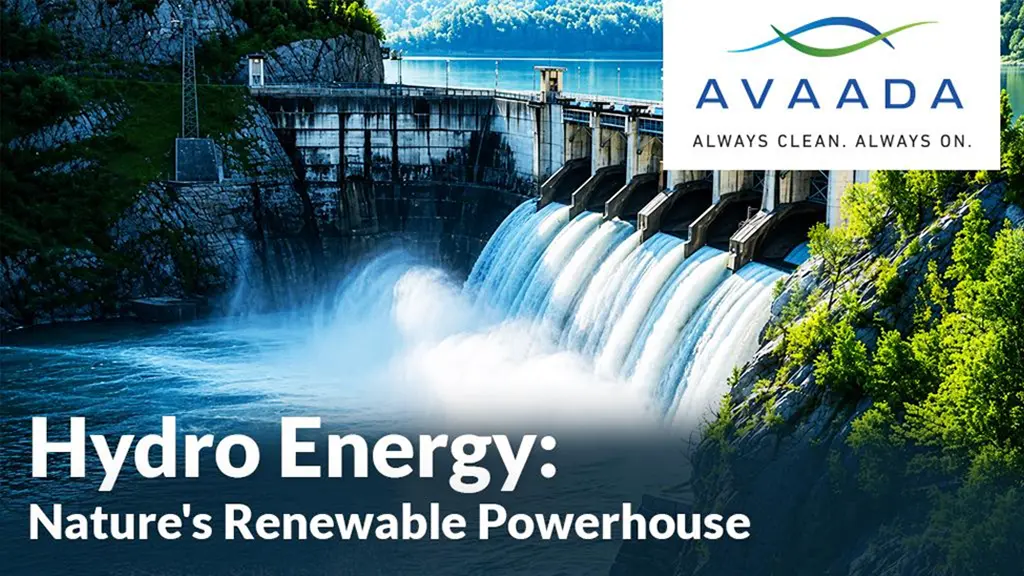
Hydro energy is renewable electricity generated using flowing or falling water. It is also known as hydroelectric power or hydel power, as it converts water movement into electricity through turbines and generators. According to the International Energy Agency (IEA), hydropower remains the world’s largest renewable electricity source globally. According to the India Climate and Energy Dashboard, the installed power capacity of operational hydropower plants in India is 51,413 MW.
As renewable energy adoption increases, hydro projects are becoming important for grid stability, storage, and balancing intermittent sources such as wind energy and solar power.
What Is Hydro Energy?
Hydro energy is electricity generated by converting the kinetic and potential energy of moving water into usable electrical power. The process depends on the natural water cycle, in which water evaporates, forms clouds, and returns as precipitation. Since water is naturally replenished, hydroelectricity is considered a renewable energy source.
What is Hydro Power in simple words?
Hydro power is electricity produced by flowing water that spins turbines connected to generators. According to the Press Information Bureau (PIB), India has harnessed around 5,171 MW of small hydro power. The Ministry of New and Renewable Energy (MNRE) also states that India has an installed capacity of 56.58 GW of hydropower.
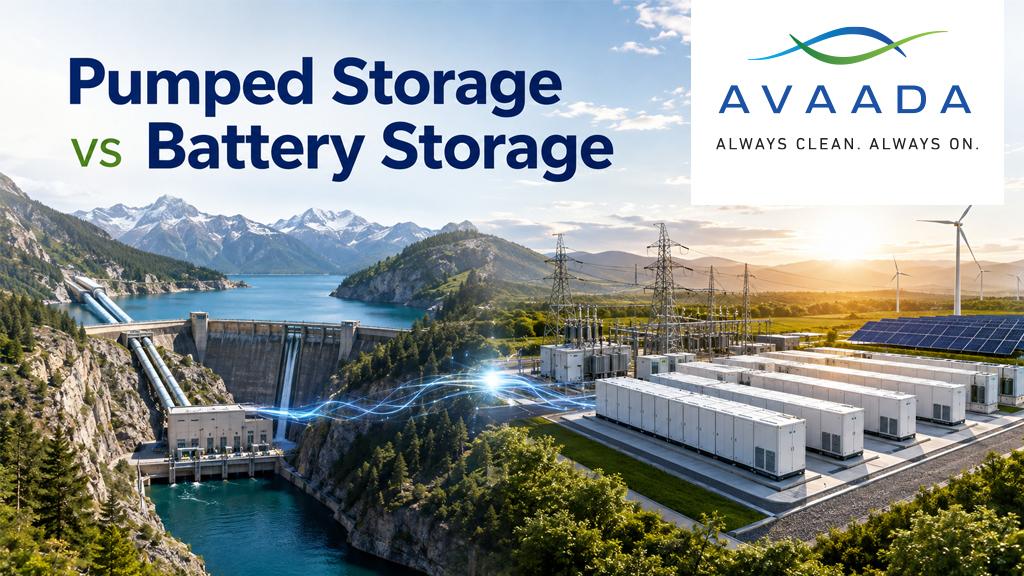
Furthermore, hydropower is increasingly supporting energy storage through pumped-storage projects, often called “water batteries,” aligning with Avaada Group’s focus on reliable, round-the-clock renewable power infrastructure.
Read Also:- What are the Different Types of Hydroelectric Systems?
How Does Hydroelectricity Work?
Hydroelectricity works by using the force of water to rotate turbines that generate electricity.
- Water is stored in a reservoir or diverted from a river.
- Intake gates direct water into a high-pressure pipe called a penstock.
- Flowing water spins turbines using hydraulic force.
- Turbines drive generators that produce electricity.
- Electricity is transmitted to the power grid through transformers.
Modern hydro turbines can achieve efficiencies of nearly 90–95%, making hydro one of the most efficient power generation technologies globally.
Types of Hydropower Plants
Different types of hydropower plants are designed based on geography, water flow, and electricity demand.
Type | Key Feature | Example |
Run-of-River | Uses natural river flow with minimal storage | Tala Plant, Bhutan |
Reservoir / Storage | Stores water in dams for controlled generation | Tehri Dam, Uttarakhand |
Pumped-Storage | Pumps water uphill for later electricity generation | Tehri PSP |
Small Hydro | Projects below 25 MW in India | Rural hydro systems |
Micro & Pico Hydro | Small off-grid systems | Remote villages |
Ocean / Tidal Hydro | Uses tides and ocean currents | Sihwa Lake, South Korea |
Pumped-storage hydropower is becoming increasingly important for balancing renewable electricity generated from solar and wind energy projects. Avaada Group also highlights storage-backed renewable systems as a key part of India’s energy transition.
Also Read: What is Renewable Energy
Uses of Hydro Energy
The uses of hydro energy extend beyond electricity generation. Some of the major applications include:
- Renewable electricity generation
- Grid stabilization and frequency regulation
- Long-duration energy storage through pumped hydro
- Irrigation and agricultural water supply
- Flood control and reservoir management
- Industrial power supply
- Rural and off-grid electrification
Hydropower also supports the integration of emerging clean technologies, including renewable-powered manufacturing and future-focused sectors such as the green hydrogen plant ecosystem in India.
Benefits of Hydroelectric Power
Hydroelectric power offers several long-term advantages:
- High efficiency of around 90% or more
- Long operational life of 50–100 years
- Low operating costs after installation
- Reliable and dispatchable electricity generation
- Low lifecycle emissions of 4–24 g CO₂eq/kWh
- Additional benefits such as irrigation and flood management
As renewable adoption grows, integrated solutions combining hydro-style balancing, storage, solar, and wind are becoming increasingly important. Avaada Group continues to support scalable renewable infrastructure with storage-backed energy systems.
Limitations of Hydro Energy
Despite its advantages, hydroelectric projects also have environmental and social considerations. Some of the key challenges include:
- Impact on river ecosystems and fish migration
- Land acquisition and rehabilitation requirements
- Dependence on rainfall and water availability
- Climate-related changes in river flow patterns
- High initial infrastructure costs
Modern projects increasingly use environmental mitigation systems, sediment management, and improved monitoring technologies.
The largest hydroelectric plant in India is the Tehri Hydroelectric Plant in Uttarakhand with an installed capacity of 2,400 MW. Some of the other hydroelectric plants in India include:
Conclusion
Hydro energy remains one of the world’s most important renewable power sources because it supports electricity generation, storage, irrigation, and grid reliability. From run-of-river systems to pumped-storage projects, hydroelectric power plays a critical role in supporting clean energy growth and reducing emissions. India still has significant untapped hydropower potential, especially as renewable integration increases.
Through integrated clean energy and storage solutions, Avaada Group continues to contribute to the development of reliable, scalable renewable infrastructure. Connect with us to explore future-ready renewable energy infrastructure.
FAQs
What is hydro energy in simple words?
Hydro energy is renewable electricity generated using flowing or falling water. The force of water rotates turbines connected to generators, which produce electricity for homes, industries, and power grids.
How does hydroelectricity work step by step?
Hydroelectricity works by storing or diverting water, directing it through turbines, and converting the turbines’ mechanical motion into electricity via generators before transmitting it to the power grid.
What are the main uses of hydro energy?
The major uses of hydro energy include electricity generation, irrigation, flood control, grid balancing, long-duration energy storage, industrial power supply, and rural electrification in remote regions.
What is the largest hydroelectric plant in India?
The largest hydroelectric plant in India is the Tehri Hydroelectric Plant in Uttarakhand with an installed capacity of 2,400 MW.
What are the different types of hydropower plants?
The main types of hydropower plants include run-of-river, reservoir/storage, pumped-storage, small hydro, micro hydro, and tidal or ocean-based hydro systems.