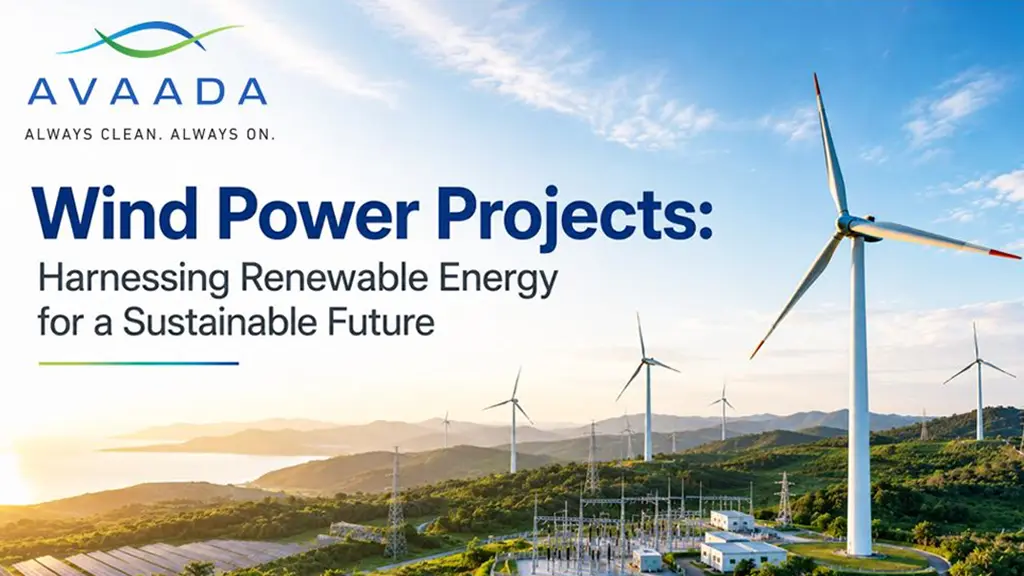
Wind power projects convert the kinetic energy of moving air into electricity. Alongside solar, wind energy serves as a foundational component of India’s clean energy transition. India reached an installed wind capacity of 58,136 MW as of 31 July 2026 after adding 6,750 MW in FY26. This capacity positions India fourth globally in installed wind power. The national potential for wind energy is assessed at 695.5 GW at a 120-meter hub height. Bridging the gap between installed capacity and total potential defines the future scope of wind power deployment.
How Wind Power Projects Work
The operational process of a wind power project involves several technical stages:
- Resource Assessment and Site Selection: Developers assess wind speed, direction and other wind characteristics before selecting a project site. The National Institute of Wind Energy (NIWE) conducts wind-resource assessment and provides wind-resource maps at multiple hub heights, including 50 m, 80 m, 100 m, 120 m and 150 m. These maps support preliminary site assessment and wind-project development.
- Capturing Kinetic Energy: Moving air creates pressure differences across aerodynamic turbine blades. This pressure difference generates lift, causing the rotor to turn and convert kinetic energy into mechanical rotation.
- Electricity Generation: The rotor drives a generator located inside the nacelle. Geared turbines use a gearbox to step up rotor speed for the generator, while direct-drive systems connect the generator directly to the rotor.
- Grid Integration and Synchronization: Wind turbines connect to the electrical grid through the plant’s electrical infrastructure, including transformers and transmission systems. Grid-connected renewable-energy projects must meet applicable synchronization and grid-connectivity requirements before injecting power into the network. MNRE’s project guidelines, for example, require synchronization approval and verification by the concerned authorities before a renewable-energy project is synchronized with the grid.
- Project Operations: Real-time monitoring systems, such as Supervisory Control and Data Acquisition (SCADA), track power output, wind speed, blade orientation and component temperatures to optimize generation and flag operational anomalies.
Types of Wind Power Projects
Wind power projects are broadly classified as onshore or offshore installations, while hybrid configurations combine wind with other renewable sources, such as solar, to improve land and grid utilization.
Onshore Wind Farms
Onshore turbines are built on land and account for nearly all installed wind capacity in India. Eight key states, Rajasthan, Gujarat, Karnataka, Maharashtra, Andhra Pradesh, Tamil Nadu, Madhya Pradesh and Telangana, hold a combined wind potential of 676.55 GW at a 120-meter height. Onshore projects offer lower construction costs and shorter commissioning timelines, though they require land acquisition and dedicated transmission connections.
Offshore Wind Farms
Offshore turbines are built in oceanic waters to capture stronger, more consistent winds. India has established a target of 30 GW of offshore wind capacity by 2030. The Union Cabinet approved Viability Gap Funding (VGF) for the country’s initial 1 GW of offshore projects off the coasts of Gujarat and Tamil Nadu.
- Floating Offshore Wind: Floating platforms allow turbines to be deployed in deeper coastal waters beyond the reach of fixed seabed foundations.
- Solar-Wind Hybrid Projects: Combining solar and wind generation at a single location optimizes land use and grid connection. Hybrid configurations offer a balanced generation profile because solar output peaks during the day while wind generation often peaks at night or during monsoon seasons. Avaada Group develops utility-scale wind, solar-wind hybrid and firm, dispatchable renewable energy solutions.
Key Components of a Wind Power Plant Project
The main structural, mechanical and control components of a wind turbine include:
- Rotor Blades: Aerodynamic blades capture energy from moving air and transfer it to the rotor. Longer blades can increase the swept area and energy-capture potential.
- Nacelle and Gearbox: The nacelle contains major drivetrain components. In geared turbines, the gearbox increases the rotor’s rotational speed before it reaches the generator.
- Generator: The generator converts the rotating drivetrain’s mechanical energy into electrical energy.
- Tower and Foundation: The tower supports the turbine and positions the rotor at an appropriate height to capture wind. Foundations transfer turbine loads safely into the ground or seabed.
- SCADA and Control Systems: Monitoring and control systems track turbine operating conditions and can control functions such as blade pitch and yaw to optimize operation and protect equipment.
Key Technology Trends in Wind Energy
Advancements in turbine design, materials and digital systems are improving wind turbine performance and reliability:
- Larger Rotors and Taller Towers: Larger rotors increase swept area, while taller towers can access stronger, more consistent wind resources, increasing energy-generation potential.
- Direct-Drive and Permanent Magnet Generators: Direct-drive turbines eliminate the conventional gearbox and can reduce the number of mechanical components requiring maintenance. Permanent-magnet generators are used in several modern turbine designs.
- Predictive Maintenance: Sensors and condition-monitoring systems can track parameters such as vibration, temperature and equipment performance to identify potential faults before they cause major failures.
- Digital Twin Technology: Digital models can combine turbine data with physical models to analyze operating conditions, support performance optimization and improve maintenance planning.
- Advanced Composite Materials: Modern turbine blades use composite materials such as glass and carbon fiber to achieve high strength with relatively low weight. Blade coatings and surface treatments can also help address leading-edge erosion caused by environmental exposure.
Benefits of Wind Power Projects
Wind power offers technical, economic and environmental advantages across energy systems:
| Category | Primary Benefit Metrics |
| Environmental | Zero operational fuel emissions and minimal operational water consumption. |
| Economic | Low cost per unit of electricity; supports domestic turbine manufacturing capacity of approximately 18,000 MW per year. |
| Energy Security | Utilizes domestic wind resources, reducing dependence on imported fossil fuels. |
| Socio-Economic | Provides long-term land lease income to property owners and supports local infrastructure improvements. |
| Climate Alignment | Supports national non-fossil capacity goals of 500 GW by 2030 and Net Zero targets by 2070. |
Challenges and Solutions
Project development requires addressing technical, regulatory and environmental considerations:
| Operational Challenge | Operational Impact | Technical or Policy Solution |
| Land Acquisition | Can extend project timelines. | Single-window state clearances and structured revenue-sharing agreements. |
| Grid Connectivity Constraints | Risk of power curtailment due to transmission limits. | Dedicated Green Energy Corridors and early connectivity allocation. |
| Environmental Considerations | Impacts on avian flight paths. | Micro-siting away from migratory corridors and radar-assisted turbine curtailment. |
| Capital Intensity | High initial investment requirements. | Long-term Power Purchase Agreements (PPAs), green bonds and blended finance. |
| Resource Variability | Fluctuation in hourly or seasonal power output. | Solar-wind hybridization integrated with Battery Energy Storage Systems (BESS) or Pumped Storage Projects (PSP). |
| Aging Fleet | Legacy turbines operating below modern efficiency levels. | Implementation of the National Repowering and Life Extension Policy for Wind Power Projects. |
To manage grid variability, Avaada Group deploys energy storage technologies alongside wind generation. We deploy around 11 GW of Pumped Storage Projects (PSP) and 16 GWh of Battery Energy Storage Systems (BESS) planned through 2031 to deliver firm, dispatchable power.
Role in Sustainable Development
Wind energy contributes directly to United Nations Sustainable Development Goal 7 (Affordable and Clean Energy) and Goal 13 (Climate Action). Replacing thermal generation with wind capacity reduces carbon intensity and conserves water resources.
Because wind generation increases during night-time hours and the monsoon season, it complements solar generation patterns. Integrating both resources creates a stable supply profile required for large-scale applications, including green hydrogen and green ammonia production. Avaada Group’s 0.5 MTPA green ammonia project in Odisha relies on integrated renewable power to support continuous electrolyzer operation.
Conclusion
India has installed 57.4 GW of wind energy capacity against an estimated potential of 695.5 GW at a 120-meter hub height. Addressing this gap represents a primary growth opportunity over the coming decade. Taller towers and longer blades are increasing energy yields at existing sites, while policy frameworks support the repowering of early operational locations. Offshore wind installations are progressing into the construction phase.
A defining advantage of wind energy is its generation profile, which complements solar power by producing electricity during night-time hours and monsoon seasons. Integrating both resources supports overall grid stability. For host states, wind power projects generate long-term lease income, strengthen local infrastructure and create sustained employment. At the national level, expanded wind capacity reduces carbon emissions and lowers reliance on imported fossil fuels.
Discover how Avaada Group’s wind power projects are helping build a cleaner, more secure energy future for India. Talk to our team.
FAQs
How much land is occupied by a wind farm?
While turbines require wide spacing to maintain airflow efficiency, the physical bases and access roads occupy only a small fraction of the total site area. The remaining land can continue to be used for agriculture or grazing.
Do wind turbines operate during extreme weather?
Turbines operate up to a designated cut-out wind speed, typically around 25 meters per second. Above this threshold, the control system rotates the blades parallel to the wind (feathering) to stop rotation safely.
What is the average operating lifespan of a wind turbine?
Standard commercial turbines have a design life of 20 to 25 years. Repowering policies allow older, lower-capacity turbines to be replaced with modern high-efficiency units on existing operational sites.
How is sound managed near residential areas?
Modern aerodynamic blade designs operate with low noise signatures. Siting guidelines mandate setback distances to ensure sound levels at nearby residences remain comparable to ambient background wind noise.
How are wind turbine blades recycled?
While steel towers and copper components are readily recycled, composite blades undergo specialized end-of-life processing, including cement-kiln co-processing and new composite recycling methods.