Imagine a city powered entirely by clean sunlight and wind currents. Electricity flows smoothly on a clear, breezy afternoon, but as the sun sets and the wind calms, regional power grids face a major balancing challenge. Because standard energy consumption continues day and night, securing round-the-clock power requires robust utility storage systems. Large-scale renewable energy storage bridges this gap by saving excess daytime electricity for later use. Partnering with an experienced pumped storage company helps grid operators turn variable generation into a dependable, non-stop power supply.
What is Pumped Storage Hydropower?
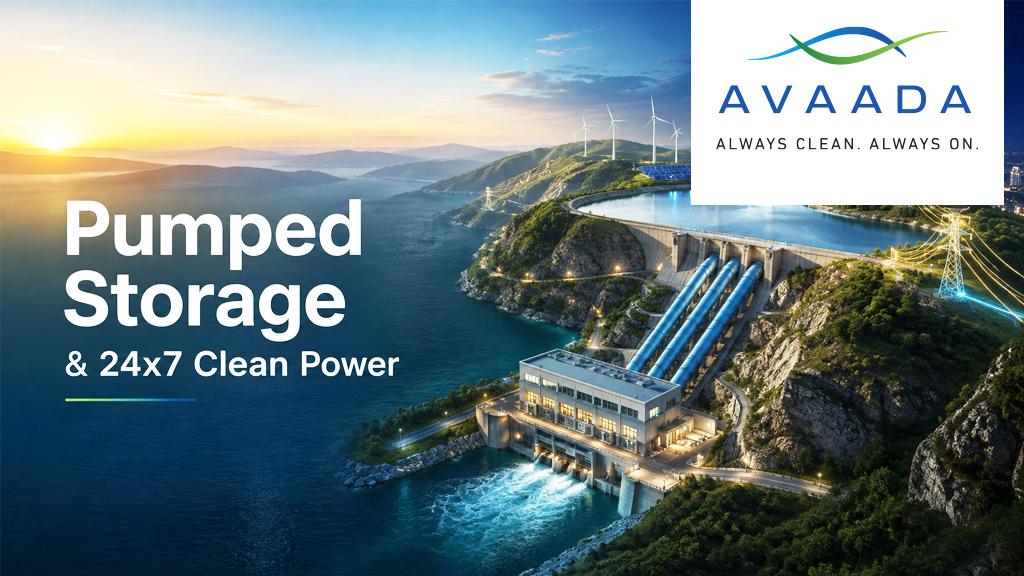
Pumped storage hydropower (PSH) is a mechanical storage technology that uses two water reservoirs at different elevations to store and dispatch electricity. During periods of low electricity demand or surplus generation, electric pumps move water from the lower reservoir to the upper reservoir, storing energy as gravitational potential energy. When power demand rises, the water flows back down through reversible pump-turbines to generate clean electricity.
Technical policy documents often use the term pumped hydro energy storage to describe this process. Pumped storage hydropower accounts for over 90% of global energy storage capacity, providing gigawatt-hours of storage.
How Pumped Storage Power Plants Work
A pumped storage power plant uses a continuous two-phase mechanical cycle to balance electrical grids:
Pumping Phase
When solar panels and wind turbines produce excess electricity during low-demand hours, the plant runs its turbines in reverse. This mechanical action pumps water from the lower reservoir through heavy underground pipes into the upper reservoir, converting excess electric power into potential energy.
Generation Phase
When power demand peaks, operators open the upper penstocks. Gravity pulls the stored water downward into the lower reservoir, spinning the reversible turbines to drive electrical generators and send power directly to the grid.
Round-Trip Efficiency and Discharge Duration
Modern pumped storage facilities operate with a round-trip efficiency between 70% and 80%. Unlike chemical batteries that discharge power over shorter periods, water-based energy systems deliver continuous electricity across multi-hour or multi-day cycles.
Why Renewable Energy Needs Storage
Variable renewable sources such as solar and wind cannot always change their output to match electricity demand.
The Intermittency Challenge of Solar and Wind
Solar power is usually highest around midday, while electricity demand often rises in the evening when solar output falls. Wind power can also change throughout the day depending on weather conditions.
Curtailment – When Renewable Power Is Unused
When solar or wind generation exceeds demand, the grid may not be able to use all available electricity. Operators may then reduce or stop generation from some plants. This is known as curtailment.
Long-Duration vs Short-Duration Storage Needs
Battery energy storage systems can respond rapidly to short-term changes in electricity supply and demand, while larger installations can also support longer discharge periods. However, larger gaps between renewable generation and electricity demand may require long-duration energy storage that can supply hundreds of megawatts for several hours.
How Pumped Storage Enables 24x7 Renewable Energy
Integrating large-scale water storage systems addresses several key operational challenges to support 24×7 renewable energy:
- Storing Midday Solar Surplus: Water batteries pump water uphill using low-cost midday solar generation, preventing clean power waste.
- Bridging Multi-Hour Wind Gaps: Reservoirs release water during calm weather periods, filling supply gaps when wind speeds drop.
- Reducing Curtailment: Capturing excess power during low-demand hours maximizes total utility usage across regional grids.
- Providing Firm Capacity: Water storage delivers predictable, dispatchable electricity that complements weather-dependent sources.
Grid Services Pumped Storage Provides Beyond Storage
Beyond storing electricity, these facilities can also provide important grid support services:
- Frequency Regulation and Inertia: Rotating turbines provide inertia that helps keep the grid frequency stable at 50 Hz.
- Voltage Support and Reactive Power: These facilities help control reactive power and maintain stable voltage across transmission networks.
- Black-Start Capability: Some plants can restart without external electricity after a major blackout, helping restore power to the grid.
- Fast-Ramping Reserve: Reversible turbines can increase power output quickly, helping meet sudden changes in electricity demand or supply.
Types of Pumped Storage Projects
Engineers design pumped hydro energy storage systems based on the location, available water resources and existing infrastructure:
- Open-Loop vs Closed-Loop Systems: Open-loop systems connect to natural water bodies such as rivers or existing reservoirs. Closed-loop systems use separate reservoirs that are not directly connected to natural water sources.
- New and Repurposed Sites: Projects can use newly built reservoirs or repurpose existing sites such as old mining pits and reservoirs.
- Hybrid Energy Facilities: Pumped hydro can be combined with large solar or wind projects to store excess renewable power and support efficient grid integration.
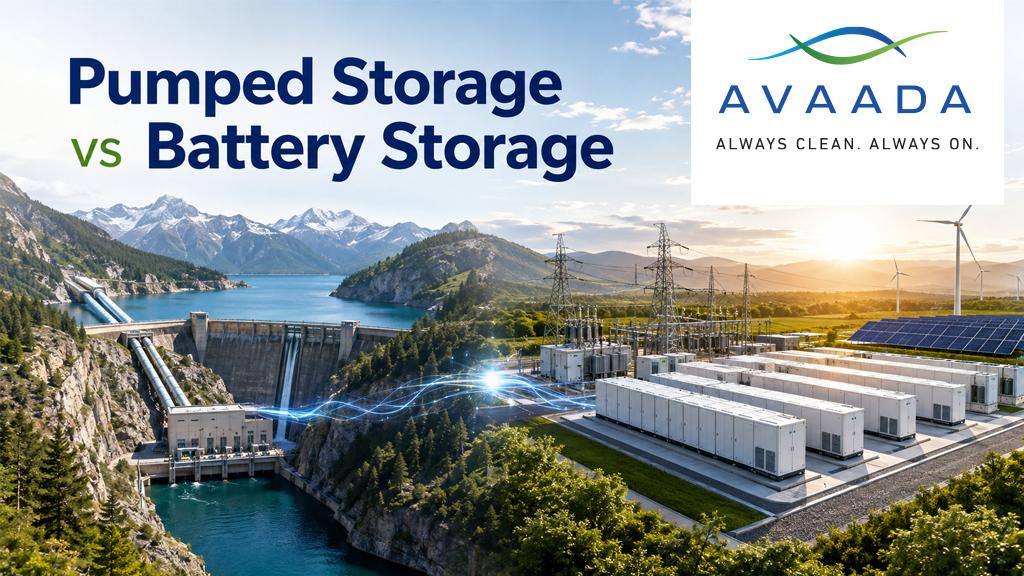
Pumped Storage vs Battery Storage
Both technologies support clean energy transition efforts, but they fulfill distinct grid functions:
| Feature | Pumped Storage Hydropower | Battery Storage (BESS) |
| Discharge Duration | Multi-hour to multi-day continuous supply | 1 to 4 hours typical utility duration |
| Asset Lifespan | 70+ years with low long-term maintenance | 10 to 15 years before cell replacement |
| Capacity Scale | Large-scale grid deployment (Hundreds of MWs) | Modular deployments (Few MWs to tens of MWs) |
| Site Requirements | Specific elevation changes and water access | Minimal space requirements, flexible placement |
| Best-Fit Use Case | Long-duration energy storage and baseload firming | Fast response and short-duration peak shaving |
What to Look for in a Pumped Storage Company
Selecting a qualified pumped storage company involves reviewing several technical criteria:
- Large-Scale Execution Track Record: Evaluation of past engineering, procurement and construction (EPC) projects for large renewable infrastructure.
- Site Assessment Capabilities: Expertise in geological mapping, environmental planning and civil engineering design.
- Advanced Turbine Systems: Integration of variable-speed reversible turbines to increase system flexibility during pumping cycles.
- Hybrid System Integration: Ability to connect water storage with solar generation, wind power and battery infrastructure.
- Asset Management Experience: Long-term operations and asset management capabilities to keep infrastructure running efficiently over decades.
Avaada Group develops utility-scale infrastructure to advance the clean energy transition. The group manages an active operational renewable capacity of 6 GWp and maintains a development pipeline of approximately 7 GW in pumped storage projects across multiple Indian states.
Challenges and Considerations for Pumped Storage Development
Developing water storage projects requires careful upfront evaluation:
- Development Timelines: Planning, environmental reviews and civil construction require multi-year development windows.
- Upfront Capital Costs: Building reservoirs, underground penstocks and powerhouses requires significant upfront capital investment.
- Geographic Constraints: Facilities require suitable terrain with adequate elevation differences between upper and lower sites.
- Environmental Planning: Environmental impact assessments ensure projects protect local biodiversity, manage water usage responsibly and support surrounding communities.
Final Thoughts
Achieving a reliable 24×7 renewable energy supply requires combining variable power generation with long-duration storage. Pumped storage hydropower remains a proven technology for balancing regional electrical grids, managing peak loads and reducing clean energy curtailment. By deploying high-capacity storage alongside solar and wind installations, grid operators can build dependable, carbon-free energy networks.
Learn how Avaada Group develops long-duration water storage solutions to stabilize modern electrical grids. Contact our engineering team today to explore clean power options for your utility operations.
FAQs
How does pumped storage hydropower work?
It pumps water to an upper reservoir during low-demand periods and releases it through turbines to generate electricity during peak demand hours.
Can pumped storage deliver 24x7 renewable energy?
Yes, storing excess midday solar and wind energy allows facilities to dispatch clean power continuously, day and night.
What is the difference between pumped hydro energy storage and battery storage?
Pumped hydro provides multi-hour to multi-day energy storage with a 70+ year lifespan, whereas batteries supply shorter-duration power with faster response times.
How long can pumped storage power plants discharge electricity?
Depending on reservoir size, facilities can discharge electricity continuously from 6 hours to several days.
What sites are suitable for pumped storage projects?
Ideal sites require appropriate topography with distinct elevation differences, stable geology and access to a reliable water supply.
How much does a pumped storage power plant cost to build?
Capital costs vary based on site geology, civil construction needs, storage capacity and access to regional infrastructure.
What grid services does pumped storage provide besides storage?
Facilities supply frequency regulation, system inertia, reactive power support, fast-ramping reserves and black-start capabilities.
How efficient is pumped storage hydropower?
Modern pumped hydro facilities deliver a round-trip efficiency between 70% and 80%.
What should I look for in a pumped storage company?
Prioritize companies with proven EPC experience, strong civil engineering depth, site assessment capabilities and long-term asset management expertise.
Is pumped storage considered renewable energy?
Yes, when the system uses clean electricity from solar or wind sources during its pumping cycle, its output is renewable.