“Green hydrogen isn’t just a fuel; it’s a promise of sustainable energy independence.”
Currently, the world is actively discussing the advancement in Green Hydrogen, India is emerging as a leading green hydrogen exporter in global markets, backed by a national target of 5 million tonnes (MT) of green hydrogen production by 2030 under the National Green Hydrogen Mission. Through the SIGHT Scheme and investments in electrolyzer technology, India is building the supply chain infrastructure required to supply green molecules to hard-to-abate industries worldwide.
Additionally, there exists no internationally agreed terminology, methodology, regulation, or carbon-intensity threshold for the categorization of different hydrogen production methods and a common framework for the carbon markets. So, it creates confusion for both producers and consumers.
Also Read: Top Battery Energy Storage Companies
Bridging the Gaps: Six Levers to Scale Green Hydrogen
So how do we bridge these gaps and scale green hydrogen? Here’s my take.
1. Tapping Green Hydrogen's Potential in Hard-to-Abate Sectors
Green hydrogen sits at the epicentre of the battle against global warming. Produced through electrolysis powered by renewable energy, along with biomass gasification, it can decarbonise a wide range of hard-to-abate industries — marine transportation, steel and heavy-duty transport. As clean technologies advance and markets grow, these green fuel solutions are becoming central to the world’s wider sustainable energy transition. But to realise their full potential, developed countries must lead the way and create strong demand for green molecules.
2. Democratising Electrolyser Technology to Cut Costs
Experts worldwide must come together to accelerate innovation and drive down the cost of green hydrogen production. One powerful step would be for the Indian government to open-source Solid Oxide Electrolyser Cell (SOEC) and Anion Exchange Membrane (AEM) technologies, rather than relying solely on production incentives. It aligns perfectly with Prime Minister Narendra Modi’s vision of “Vasudhaiva Kutumbakam” — the world as one family.
3. A Fair Deal for the Global South: Article 6.2 Trade
Developed nations have far more resources to incentivise green initiatives. But what about the Global South? This is exactly where the UN framework for environmental trade under Article 6.2 becomes relevant. It enables green-molecule trade between developed and developing nations, creating a platform from which countries like India can emerge as global suppliers of green hydrogen and a hub for sustainable energy solutions.
4. Open-Sourcing Electrolyser Technology — the LINUX Lesson
To accelerate progress, open-sourcing electrolyser technology could be a genuine game-changer. Just as LINUX pioneered the open-source software model — fostering global collaboration, transparency and continuous improvement through a worldwide development community — I propose the same for electrolyser technology. It would democratise access to knowledge and expertise, significantly expediting advancements and driving down the cost of green hydrogen production in India — a cornerstone of the country’s clean energy future.
5. India's Green Hydrogen Mission: 5 MT by 2030
India’s journey to green hydrogen is a testament to its leadership and commitment to sustainable energy solutions. Under the Ministry of New and Renewable Energy, the country has set a target to produce 5 million tonnes (MT) of green hydrogen annually by 2030. This ambitious goal is not only a catalyst for technological innovation but also a driver of economic growth and employment for millions. Through initiatives such as the SIGHT Scheme and sustained investment in R&D, India is laying the foundations for a sustainable, green future powered by clean energy.
6. Overcoming Regulatory Hurdles to Green Hydrogen Adoption
While developing nations must take the lead in building global demand for “green molecules”, green hydrogen adoption still faces hurdles from strict regulatory policies. The European Union, for instance, requires electron-to-molecule matching on an hourly rather than quarterly basis — making its import targets almost impossible to meet. Despite good intentions, this approach unintentionally excludes potential suppliers such as India, whose unified national grid can bank green electrons drawn from a fast-growing renewable energy base. As the old saying goes: perfect is the enemy of good.
Also Read: What is Green Hydrogen: How It’s Made & Why It Matters
How Avaada Delivers Integrated Green Energy Solutions
As a clean energy company built for India’s energy transition, Avaada brings the entire renewable value chain under one roof. While most developers focus on a single source, Avaada operates as an integrated renewable energy company — pairing utility-scale solar and wind with hydro, pumped storage, and battery energy storage systems (BESS) to deliver firm, round-the-clock power rather than intermittent supply. With in-house solar PV manufacturing and end-to-end project development, that capability runs from the cell to the grid.
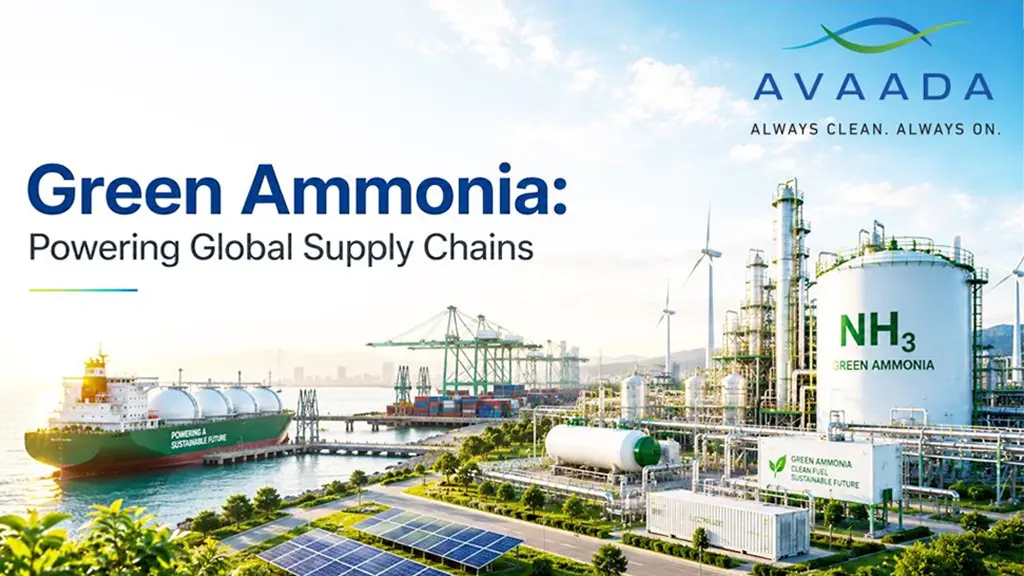
That integration extends into green molecules. Avaada’s green hydrogen ecosystem spans green ammonia and green methanol, making the group one of India’s green hydrogen frontrunners for hard-to-abate industries looking to decarbonise.
It is this breadth of generation, storage and clean fuels engineered to work together that makes Avaada a dependable renewable energy solutions provider, true to its promise: Always Clean. Always On. For industrial buyers and utilities alike, that single-partner model removes the complexity of coordinating multiple vendors across a clean-energy project.
Planning a clean-energy or green-hydrogen project? Explore Avaada’s green hydrogen capabilities, or talk to our energy team to build a solution tailored to your goals.
Conclusion: A Shared Path to a Clean Energy Future
As we consider the path forward, one question arises: Are we prepared to welcome the future of Green Hydrogen and bring in a new era of environmentally friendly energy? Our combined efforts, our desire to work together, and our dedication to leaving a legacy of prosperity and a clean environment are the answers. So, remember, when we come together and share our knowledge, we build a robust supply chain- one that ensures Green Hydrogen illuminates not just India, but the entire planet!
FAQs
What is green hydrogen, and why does it matter for global energy transition?
Green hydrogen is hydrogen produced through electrolysis powered entirely by renewable energy, resulting in zero carbon emissions. Green hydrogen matters for global energy transition because it can decarbonise hard-to-abate sectors — including steel, marine transportation, and heavy industry — that cannot be electrified directly, making it a critical fuel for achieving net-zero targets worldwide.
Is Avaada involved in green hydrogen production?
Yes. Avaada is developing green hydrogen production capacity as part of its vertically integrated renewable energy portfolio, alongside green ammonia and green methanol. Avaada’s green hydrogen initiatives are powered entirely by its own solar and wind generation assets, aligning with India’s National Green Hydrogen Mission target of 5 million tonnes by 2030.
How does Avaada plan to support India's green hydrogen export ambitions?
Avaada supports India’s green hydrogen export ambitions by integrating renewable power generation with green molecule production at the same project sites, reducing the cost of electrolysis. This integrated model allows Avaada to produce green hydrogen, ammonia, and methanol competitively for industrial buyers in markets such as Europe, Japan, and South Korea that are seeking to decarbonise hard-to-abate sectors.
What are the main regulatory challenges for green hydrogen adoption globally?
The main regulatory challenges for global green hydrogen adoption include the absence of internationally agreed carbon-intensity thresholds, inconsistent hydrogen classification frameworks across markets, and strict matching rules — such as the European Union’s hourly electron-to-molecule matching requirement — that unintentionally exclude large renewable-rich nations like India, which operates a unified national grid capable of banking green electrons at scale.