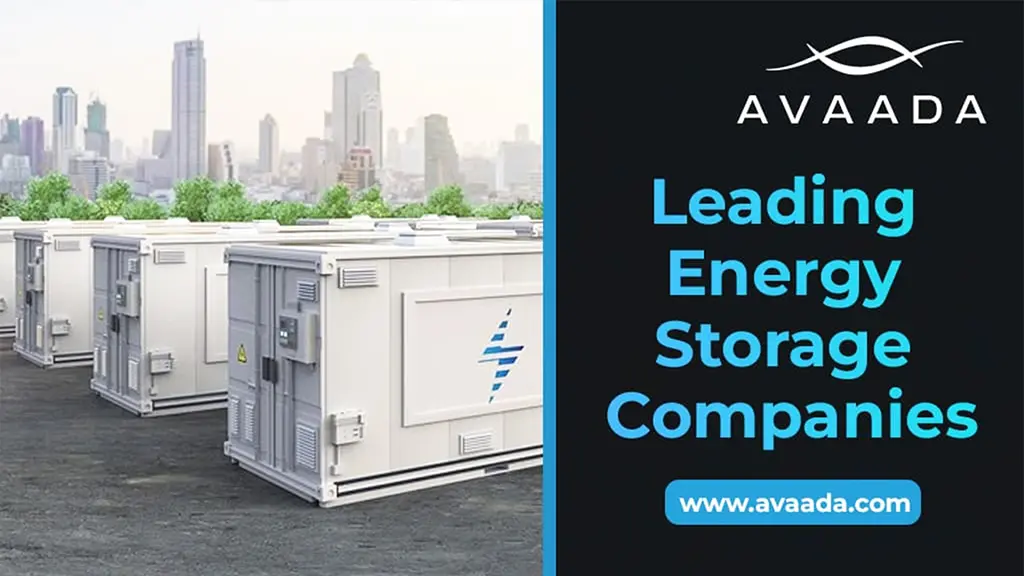
As the world is shifting to clean energy at a rapid pace, the ability to store that energy efficiently becomes as important as generating it. Whether it is wind, solar, or hydro, renewable energy sources need a dependable storage solution to manage intermittency and ensure a reliable, continuous electricity supply. India is strengthening its renewable energy infrastructure to meet its sustainability goals.
The Government of India has set a target of achieving 500 GW of installed electricity generation capacity from non-fossil fuel-based sources by 2030, with solar and wind expected to contribute a major share. To support this large-scale renewable integration, the National Electricity Plan (2023), published by the Central Electricity Authority (CEA), projects a requirement for 208 GWh of Battery Energy Storage Systems (BESS) by 2030. Energy storage companies in India play an important role in shaping India’s clean energy future by improving grid reliability, energy efficiency, and long-term sustainability.
List of Top BESS integration with RE Project companies in India
Utility-scale energy storage companies provide the necessary grid flexibility and stability to support large-scale decarbonization efforts. They build large-scale battery systems and storage infrastructures that enable grid flexibility, stabilize supply, and support decarbonization efforts. Here are the top 10 listed energy storage companies in India for 2026, with a focused look at each player’s Battery Energy Storage System (BESS) footprint:
1. Avaada Group
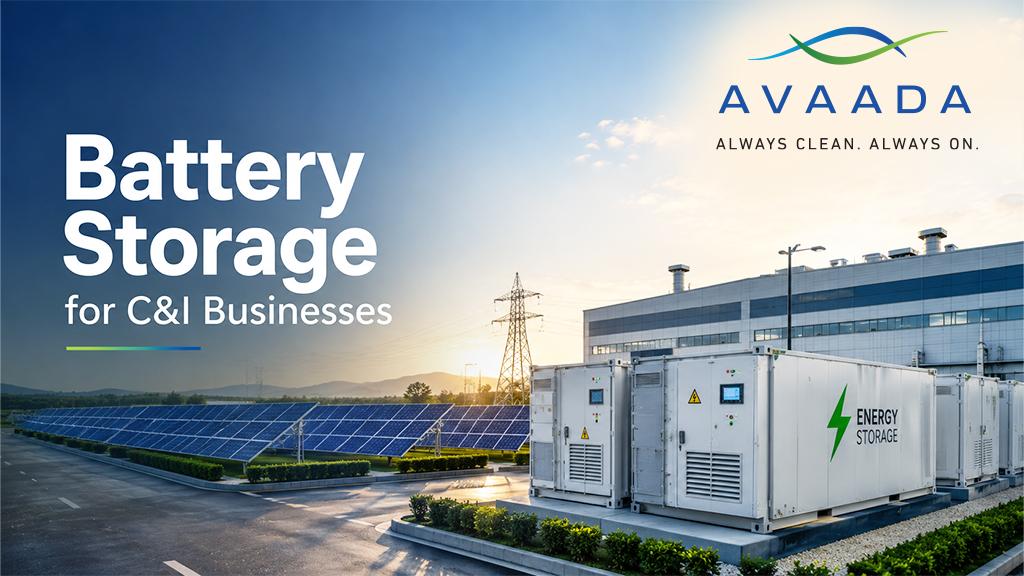
Avaada Group is establishing itself as one of the leading BESS project developers in India,building utility-scale Battery Energy Storage Systems (BESS) that anchor some of the largest BESS projects in India. Avaada is using FDRE-linked tenders to deploy GWh-scale battery storage that stabilises the national grid and enables round-the-clock clean power. Its integrated approach — combining renewable generation with co-located and standalone BESS — positions Avaada among the most forward-looking BESS project developers in the country.
Key BESS milestones:
- 16 GWh BESS pipeline integrated into Firm and Dispatchable Renewable Energy (FDRE) projects – one of the deepest BESS pipelines among Indian BESS project developers.
- Anchors one of the largest BESS projects in India: a 2,500 MWh BESS paired with 1,560 MWp of solar in Rajasthan, foundation stone laid by Hon’ble Prime Minister Narendra Modi.
- 1 GW BESS project in Madhya Pradesh — among the largest BESS projects in India under development in the central region.
- 5 GWh of BESS capacity in Rajasthan is under execution, to come up within the present FY(26-27), with upwards of 5.3 GWh is expected to be ready by FY27-28 and upwards of 10GWh expected by FY28-29.
- FDRE-anchored BESS portfolio spans Rajasthan, Madhya Pradesh, Karnataka and Tamil Nadu — placing Avaada among the most active utility-scale BESS project developers in India.
2. Adani Green Energy Ltd.
Adani Green Energy Ltd. (AGEL) is one of India’s largest renewable energy developers and a direct BESS competitor to Avaada, scaling battery storage alongside its 19+ GW operating renewable portfolio. Integration of BESS with solar and wind at Khavda is aimed at delivering firm, dispatchable power to the national grid.
Key BESS milestones:
- 1,376 MWh BESS commissioned at the Khavda Renewable Energy Park, Gujarat.
- Adani Group entry into BESS announced with one of the world’s largest single-location projects: 1,126 MW / 3,530 MWh.
- Plans to commission 10+ GWh of BESS in FY26 alone, backed by an annual capex of ~₹25,000 crore.
- Target: 15 GWh of BESS by March 2027 and 50 GWh over the next five years.
Read Also:- What is BESS, and how does it work?
3. ReNew
ReNew is one of India’s largest independent power producers (IPPs) and a leading utility-scale BESS developer, operating wind and solar assets across multiple states. The company focuses on Round-the-Clock (RTC) and FDRE tenders, pairing solar and wind with co-located BESS to deliver firm power to utility off-takers.
Key BESS milestones:
- Andhra Pradesh hybrid project with ~2,000 MWh of BESS — among the largest BESS installations under development in India.
- Multiple FDRE and peak-power tender wins under SECI, placing ReNew in the same auction segments as Avaada.
- Diversified portfolio of wind + solar + storage targeting RTC delivery for commercial and utility off-takers.
4. JSW Energy
JSW Energy, through its subsidiary JSW Neo Energy, is among the most aggressive BESS players in India and a direct competitor to Avaada in the utility-scale storage segment, with an explicit storage target of 40 GWh by 2030.
Key BESS milestones:
- Locked-in energy storage portfolio of 29.6 GWh, of which 3.2 GWh is BESS.
- Won 500 MW / 1,000 MWh of standalone BESS in SECI’s landmark 1 GW / 2 GWh tariff-based tender.
- Executing a 500 MWh BESS for RVUNL in Rajasthan.
- Developing a 125 MW / 500 MWh standalone BESS in Kerala under a tripartite arrangement with SECI and KSEB.
- Stated target of 40 GWh of total energy storage by 2030.
5. NTPC Green Energy
NTPC Green Energy Limited (NGEL), the renewable arm of NTPC, has emerged as one of the largest utility-scale BESS developers in India. By co-locating storage at existing thermal and renewable sites, NTPC is using its grid footprint to scale BESS at the same pace as Avaada’s pipeline.
Key BESS milestones:
- Approved investment of ~₹58.22 billion (about $623 million) to set up 4.7 GWh of BESS.
- EPC tender floated for an 800 MW / 3,200 MWh BESS at the Khavda RE Park, Gujarat.
- 1 GWh BESS awarded to SPML Infra at the Barauni Thermal Power Station, Bihar, for ₹1,128 crore.
- 290 MWh BESS under construction with Enrich Energy at Simhadri, Andhra Pradesh.
- 2,334 MWh of BESS awarded across thermal sites in Karnataka, Maharashtra, Bihar, Andhra Pradesh and Telangana.
6. Tata Power Renewable Energy
Tata Power Renewable Energy Limited (TPREL), part of the Tata Group, is a major IPP and BESS competitor to Avaada, with a 10.9 GW renewable portfolio (5.6 GW operational + 5.3 GW under development), now aggressively expanding into standalone and co-located BESS.
Key BESS milestones:
- First standalone Battery Energy Storage Purchase Agreement (BESPA) signed with NHPC for KSEB: 30 MW / 120 MWh BESS at a 220 kV substation in Kerala, 12-year service contract, commissioning by October 2026.
- 100 MW solar + 120 MWh BESS commissioned at Rajnandgaon, Chhattisgarh — one of India’s largest solar + BESS deployments.
- Regulatory approval for a 100 MW BESS across 10 sites near load centres in Mumbai.
- 100 MW / 200 MWh standalone BESS deployment in Rajasthan.
7. Reliance Power
Reliance Power, through its subsidiary Reliance NU Energies, has positioned itself as one of India’s largest integrated solar and BESS players, competing directly with Avaada in nearly every utility-scale FDRE and peak-power tender.
Key BESS milestones:
- Pipeline of 2.5+ GWp solar and 2.5+ GWh of BESS.
- Won 500 MW / 1,000 MWh standalone BESS under SECI’s 1 GW / 2 GWh tender at ₹3,81,999 per MW per month.
- Reliance NU Suntech signed a 25-year PPA with SECI for 930 MW solar + 465 MW / 1,860 MWh BESS at ₹3.53/kWh.
- Reliance NU Energies won SJVN’s 350 MW solar + 175 MW / 700 MWh BESS at ₹3.33/kWh.
8. Acme Solar Holdings
Acme Solar Holdings has rapidly transitioned from a pure-play solar developer into one of the most active BESS bidders in India, competing directly with Avaada in FDRE and peak-power auctions.
Key BESS milestones:
- 301 MW renewables + 1,204 MWh BESS won under SECI’s FDRE-VII tender at a fixed tariff of ₹6.28/kWh, delivering assured peak power daily.
- 275 MW / 550 MWh standalone BESS in Andhra Pradesh (50 MW / 100 MWh at Kuppam at ₹2,10,000/MW/month; 225 MW / 450 MWh at Ghani at ₹2,22,000/MW/month) under NHPC.
- 220 MW solar + BESS project at Morena Solar Park, Madhya Pradesh, won at ₹2.764/kWh, COD by Dec 31, 2027.
Read Also:- Understanding the Different Types of Battery Energy Storage Systems (BESS)
9. Serentica Renewables
Serentica Renewables, backed by Twin Star (Vedanta group) and KKR, is a fast-growing renewable-plus-storage IPP and a direct competitor to Avaada in the FDRE category.
Key BESS milestones:
- Won the highest single allocation in SECI’s FDRE-VII tender at 600 MW — delivers 2,400 MWh of peak power daily via a co-located solar + BESS system.
- EOI floated for 800 MWh of standalone ISTS-connected BESS (200 MW / 400 MWh of 2-hour storage + 100 MW / 400 MWh of 4-hour storage), 12-year service agreement starting June 2026.
- Commitment of 8,500 MW by 2028 and 17 GW of clean energy capacity by 2030.
10. Hero Future Energies
Hero Future Energies (HFE), part of the Hero Group, has commissioned wind and solar projects across seven Indian states and is now scaling Battery Energy Storage as a core line of business, layering BESS into its FDRE and RTC bids.
Key BESS milestones:
- Maiden utility-scale BESS in India: 10 MW / 20 MWh project in Kerala, 15-month commissioning window from signing.
- Planned investment of $2+ billion over the next 2.5 years to integrate BESS with the solar, wind and hybrid pipeline.
- Current capacity: 1.9 GW commissioned and 3.4 GW under construction; pipeline target of 30 GW by 2030.
Together, these companies represent the competitive landscape Avaada Group operates in — large IPPs and renewable developers racing to build out Battery Energy Storage Systems at GWh scale. Among them, Avaada Group differentiates itself through its 16 GWh BESS pipeline, FDRE-linked anchor projects and an integrated approach across solar, wind and storage.
Conclusion
India’s transition to clean energy is increasing demand for advanced energy storage technologies that enhance grid stability and provide an uninterrupted supply of renewable power. As energy demands evolve, utility-scale storage remains a cornerstone of power infrastructure. Energy storage companies investing in Battery Energy Storage Systems (BESS) and Pumped Storage Projects (PSP) are expected to play a major role in strengthening the country’s renewable energy ecosystem. Among these players, Avaada Group stands out through its integrated approach toward renewable generation, utility-scale storage, and round-the-clock clean energy infrastructure development.
Discover how Avaada Group is advancing India’s renewable energy and storage sector through large-scale clean energy initiatives, with a focus on BESS, pumped storage, and sustainable infrastructure solutions.
FAQs
Which is the largest BESS project in India?
As of 2026, the largest BESS project under development in India is Avaada Group’s 2,500 MWh battery storage facility paired with 1,560 MWp of solar at Pugal in Bikaner, Rajasthan. The foundation stone was laid by Prime Minister Narendra Modi in September 2025 and the project is recognised as India’s single largest storage deployment.
What is the difference between BESS and pumped hydro storage?
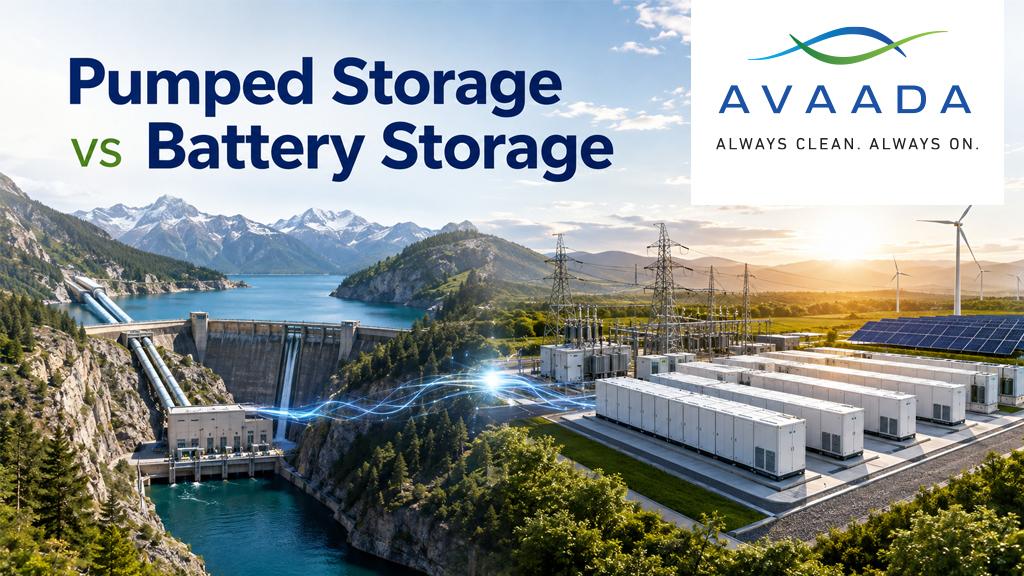
Battery Energy Storage Systems (BESS) use lithium-ion or similar chemistries to store electricity for short durations typically two to four hours making them ideal for peak shaving and intra-day balancing. Pumped hydro storage uses elevated water reservoirs to deliver six to twelve hours or more of dispatchable power, making it better suited to long-duration and seasonal balancing. Companies like Avaada and JSW are deploying both, while Greenko specialises in pumped hydro.
What is an FDRE project?
Firm and Dispatchable Renewable Energy (FDRE) projects combine solar, wind, and storage at one bid point so the developer delivers contracted power on demand, not just when the sun shines or the wind blows. FDRE tenders typically guarantee availability for specific hours and command higher tariffs than vanilla solar. They have become India’s preferred procurement model for round-the-clock clean power.
How much storage will India need by 2030?
Central Electricity Authority estimates suggest India will need roughly 74 GW / 411 GWh of energy storage by 2032 to support its 500 GW non-fossil capacity target. That makes the 2025-2027 window when most current projects come online critical to the country’s clean energy transition.