

Imagine a massive cargo ship crossing the ocean or a jet soaring across continents without leaving a trail of thick, black smoke. For decades, the global economy has relied on coal and oil — but rising climate concerns and energy demands are rewriting the energy script. Today, the shift toward eco-friendly fuel is no longer a distant concept; it is a functional necessity.
By adopting green fuel energy, nations are working to decouple economic growth from environmental degradation. These renewable fuels offer a way to power our lives while protecting the air we breathe and the ecosystems we inhabit, ensuring energy security through indigenous, clean sources. As India races toward its 500 GW renewable energy target by 2030 and a net-zero economy by 2070, green fuels are emerging as the decisive link between clean electricity generation and the hard-to-abate sectors of transport, industry, and aviation.
What is Green Fuel?
Green fuel is an eco-friendly fuel produced from renewable and sustainable sources that reduces carbon emissions and environmental impact. Unlike fossil fuels, which take millions of years to form and release trapped carbon when burned, these fuels are part of a shorter, cleaner cycle.
Green fuel is, it is an energy carrier derived from biological materials (biomass) or created through chemical processes powered by renewable electricity, such as wind or solar. These fuels are designed to be “drop-in” solutions, meaning they can often be used in existing engines and infrastructure with little to no modification, making the transition to an environmentally friendly fuel much faster for heavy industries.
Types of Green Fuels
Green fuels come from different renewable sources and are adopted across industries to reduce pollution and dependence on fossil fuels.
1. Green Hydrogen
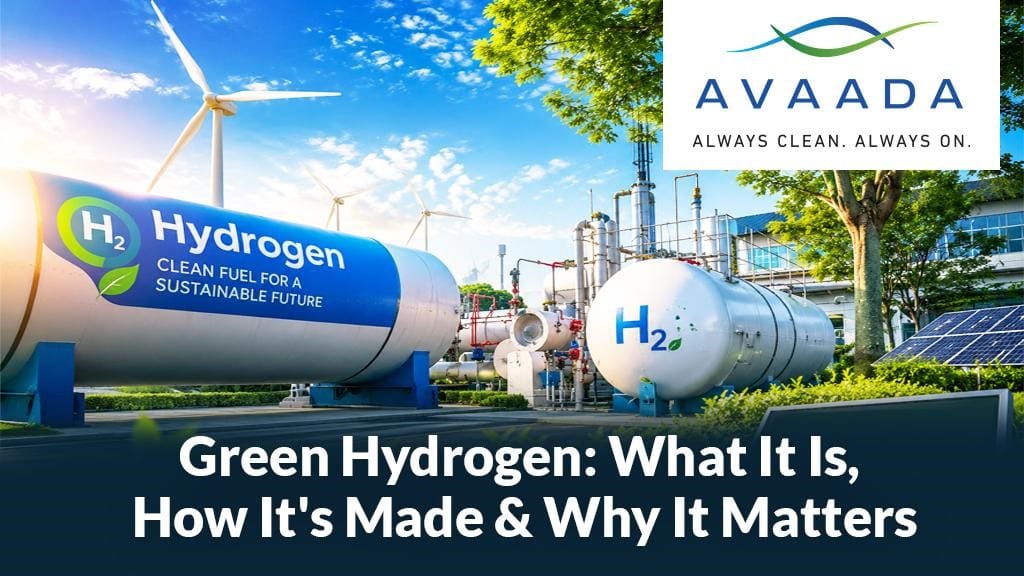
Among the most widely discussed forms of green fuel energy today, green hydrogen is produced by splitting water molecules using renewable electricity (from solar or wind) through a process called electrolysis. It emits zero carbon during both production and end use.
2. Green Methanol
Green methanol is produced from renewable feedstocks — such as biomass or captured carbon dioxide — combined with green hydrogen. It is rapidly gaining adoption in the shipping industry as a clean alternative to heavy bunker fuel.
3. Green Ammonia
Green ammonia is produced by combining green hydrogen with nitrogen sourced from the air. It is increasingly recognized as a key export commodity and a clean fuel for large-scale maritime transport.
4. Sustainable Aviation Fuel (SAF)
The aviation sector is one of the hardest to decarbonize. SAF is a clean alternative to fossil-based jet fuel, produced from sustainable feedstocks such as forestry residues or captured atmospheric carbon. It is chemically similar to conventional jet fuel, meaning it can be stored in existing airport infrastructure and used in the same aircraft engines without modification.
5. Biodiesel
Biodiesel is produced by processing vegetable oils or animal fats. It is one of the most mature green fuels, compatible with existing diesel engines with minimal modifications.
6. Bioethanol
Produced by fermenting sugarcane, corn, or other plant-based materials, bioethanol is blended with petrol to create cleaner fuel options. India has achieved significant milestones in ethanol blending with petrol, reaching an average 10% blend nationally to reduce oil imports.
7. Biogas
Biogas is derived through the anaerobic digestion of organic materials, including agricultural residues, manure, and municipal solid waste. It can be purified into bio-methane for broader use as a clean cooking or vehicle fuel.
Also Read: Top Green Energy Companies in India
Production Methods of Green Fuel Energy
Green fuel production encompasses diverse methods that harness renewable resources and innovative technologies. The table below summarises the primary pathways:
Production Method | Description | Key Advantages | Challenges |
Alkaline Electrolysis | Uses a liquid alkaline solution to split water into hydrogen and oxygen using electricity | Cost-effective and well-established technology | Moderate efficiency compared to newer methods |
PEM Electrolysis | Uses a solid polymer electrolyte membrane to separate hydrogen and oxygen | High efficiency, compact design, rapid response to variable renewable output | Higher production cost; requires precious metals in some configurations |
SOEC (Solid Oxide Electrolysis Cell) | Operates at high temperatures to split water with improved thermodynamic efficiency | Potentially higher efficiency; better integration with industrial waste heat | High-temperature operation requires robust, specialised materials |
Photocatalytic Hydrogen Production | Uses sunlight and advanced metal-organic frameworks (MOFs) to generate hydrogen directly | Reduces reliance on expensive materials; fully solar-driven | Currently experimental; lower scale and yield vs electrolysis |
Biomass Gasification | Converts organic material into syngas (H2 + CO) through high-temperature treatment | Utilizes agricultural and forestry waste; versatile outputs | Requires careful feedstock management and gas cleaning |
Renewable Energy Integration | Electricity for electrolysis is sourced entirely from wind, solar, or hydropower | Lowest carbon intensity; promotes full-cycle clean production | Intermittent energy supply requires storage or grid-balancing solutions |
While each method presents unique advantages and challenges, the collective development and integration of these technologies with renewable energy sources is critical to delivering scalable, cost-effective, and truly environmentally friendly green fuel solutions.
Advantages of Green Fuels
Green fuels offer a compelling combination of environmental, economic, and strategic benefits — making them far more than just a climate remedy.
1. Dramatically Reduced Carbon Emissions
Green fuels emit little to no CO2 during use. Green hydrogen and green methanol, in particular, produce zero direct emissions at the point of combustion or fuel-cell conversion. This directly supports national and corporate net-zero commitments under the Paris Agreement.
2. Improved Air Quality and Public Health
Burning eco-friendly fuels produces far fewer particulates, sulphur oxides, and nitrogen oxides compared to fossil fuels. This leads to measurably cleaner air in cities, reduced respiratory illnesses, and improved quality of life for millions of urban residents.
3. Energy Security and Independence
By producing green fuel domestically from indigenous renewable resources — sunlight, wind, or organic waste — a country significantly reduces its vulnerability to global oil price shocks and geopolitical supply chain disruptions. This strengthens the national economy and ensures long-term energy independence.
4. Virtually Unlimited and Renewable Source
Unlike oil wells that eventually run dry, the feedstocks for renewable fuels — sunlight for hydrogen via electrolysis, organic waste for biogas, or agricultural by-products for bioethanol — are continuously replenished. This ensures a consistent energy supply for generations.
5. Drop-In Compatibility
Many green fuels are chemically similar to their fossil counterparts, meaning existing engines, pipelines, and storage infrastructure require minimal or no modification. This dramatically reduces transition costs for industry and accelerates large-scale adoption.
6. Decarbonization of Hard-to-Abate Sectors
Green fuels are the only viable pathway for decarbonizing sectors where direct electrification is impractical — including long-haul shipping, aviation, steel manufacturing, cement production, and heavy chemicals. Green hydrogen and its derivatives (ammonia, methanol) can replace carbon-intensive feedstocks in these industries.
7. Waste-to-Energy Value Creation
Fuels like biogas and biodiesel convert agricultural waste, animal manure, and municipal solid waste into productive energy. This creates a circular economy model that reduces landfill pressure, lowers methane emissions from decomposing organic matter, and generates economic value from material that would otherwise be discarded.
8. Economic Growth and Rural Livelihoods
Investments in green fuel infrastructure foster innovation, create skilled employment opportunities, and establish entirely new industries. Farmers, rural communities, and local entrepreneurs benefit directly from the production of biofuels and biogas, contributing to inclusive economic development.
9. Support for Corporate ESG Goals
Companies that adopt eco-friendly fuels can systematically lower their Scope 1 and Scope 2 emissions, enhance sustainability reporting, strengthen investor relations, and gain significant reputational value in an era of increasing ESG scrutiny.
Also Read: Top Battery Energy Storage Companies India
Green Fuel vs Fossil Fuel: Key Differences
Understanding the contrast between green and fossil fuels clarifies why the transition is both urgent and inevitable.
Factor | Green Fuel | Fossil Fuel |
Source | Renewable — continuously replenished from solar, wind, biomass, or waste | Non-renewable — formed over millions of years; finite and depleting |
Carbon Emissions | Low to zero carbon emissions during production and use | High CO2, NOx, and SOx emissions are the primary driver of climate change |
Air Quality Impact | Minimal particulate matter significantly improves urban air quality | Major contributor to smog, respiratory illness, and urban pollution |
Energy Security | Produced domestically; reduces geopolitical supply risk | Subject to price volatility and international supply chain disruptions |
Sustainability | Highly scalable for the long term | Low reserves are being exhausted |
Infrastructure Change | Drop-in solutions available; many are compatible with existing systems | Established but carbon-intensive infrastructure |
Price Trend | Declining rapidly with the technology scale-up | Volatile and historically subject to global price shocks |
Environmental Impact of Green Fuels
The environmental benefits of shifting to green fuels are substantial and wide-ranging:
- Reduced Emissions: Green fuels minimize the emission of carbon dioxide, sulphur oxides, and nitrogen oxides — the primary contributors to climate change and acid rain.
- Improved Air Quality: Cleaner fuels reduce smog and airborne particulates, directly lowering health risks in urban centres across India and globally.
- Waste Management: Biogas and biodiesel convert organic waste streams into productive energy, reducing landfill pressure and associated methane emissions.
- Ecosystem Protection: Reduced fossil fuel extraction and combustion lowers soil, water, and ocean pollution — protecting biodiversity and marine ecosystems.
- Energy Security: Using eco-friendly fuel minimizes dependence on imported fossil fuels, enhancing resilience and reducing balance-of-payments pressure.
By promoting the use of green fuel energy, countries not only reduce emissions but also improve public health and environmental resilience across multiple dimensions simultaneously.
How Avaada is Leading India's Green Fuel Revolution
At Avaada, the commitment to green fuel energy extends far beyond policy statements. Avaada’s integrated value-chain approach connects electrons generated through world-class solar and wind installations directly to the production of green molecules (fuels) — a seamless bridge from renewable generation to industrial decarbonization.
Avaada is convinced of the potential of green fuels as a low-carbon energy carrier, and the company is committed to funding large-scale green fuel production projects that leave a lasting positive impact on the economy and society while delivering substantial returns for investors and stakeholders.
Avaada's Green Fuel Portfolio and Key Initiatives
Focus Area | Key Initiatives & Impact |
Green Hydrogen Production | Using utility-scale renewable energy for electrolysis, establishing commercial-scale green hydrogen production facilities, and developing green ammonia storage infrastructure for export markets. |
Green Methanol | Developing green methanol production using captured CO2 and green hydrogen, targeting the maritime sector as a primary off-take market. |
Sustainable Aviation Fuel (SAF) | Actively investing across the SAF value chain to support aviation decarbonization; building partnerships with airlines and airports to accelerate SAF adoption in India. |
Renewable Energy Generation | Large-scale solar and wind projects across India are providing the lowest-cost, zero-carbon electricity to power electrolyzers and fuel production at scale. |
Solar PV Manufacturing | Domestic manufacturing of solar modules and electrolyzers to reduce import dependence and support India’s Atmanirbhar Bharat ambitions in clean energy technology. |
Energy Storage Solutions | Pumped hydro storage and BESS solutions that enable round-the-clock power delivery — ensuring green fuel production facilities have a reliable, uninterrupted electricity supply. |
Community Engagement | Creating jobs, launching training programmes, and developing skill development initiatives for local communities — particularly women — in regions where Avaada operates. |
Policy Advocacy | Supporting India’s 500 GW renewable energy target by 2030 and India’s National Green Hydrogen Mission; collaborating with government bodies, international organizations, and industry consortiums. |
These integrated initiatives not only accelerate the reduction of India’s dependence on fossil fuels but also position Avaada as a strategic partner for industries seeking credible, scalable pathways to net-zero — from domestic power consumers to global maritime and aviation companies.
Why Avaada Stands Apart in the Green Fuel Landscape
- End-to-End Integration: Avaada uniquely controls the entire value chain — from renewable power generation and green hydrogen production to derivative fuels like green ammonia, methanol, and SAF. This integration drives down production costs and ensures quality assurance at every step.
- Scale and Ambition: With multi-gigawatt renewable energy capacity under development, Avaada has the generation assets required to power large-scale electrolyzers — a critical bottleneck for competitive green fuel production.
- Innovation-Led Manufacturing: Avaada’s domestic solar module and electrolyser manufacturing capabilities reduce India’s import dependency and create a robust indigenous supply chain for the green fuel economy.
- Proven ESG Leadership: With ISO accreditations, comprehensive sustainability reporting, and award-winning CSR programmes, Avaada delivers on environmental and social commitments — not just energy commitments.
- Policy Alignment: Avaada’s roadmap is fully aligned with the Government of India’s National Green Hydrogen Mission, the 500 GW renewable energy target, and India’s international climate pledges under the Paris Agreement.
Challenges of Green Fuels — And How They Are Being Addressed
Despite their transformative potential, green fuels still face a set of practical challenges on the path to mainstream adoption:
High Production Cost: Green hydrogen and its derivatives currently carry a cost premium over fossil-based alternatives. However, costs are declining rapidly — driven by plummeting solar and wind electricity prices, improving electrolyser efficiencies, and economies of scale. Avaada’s integrated generation and manufacturing model is specifically designed to accelerate this cost reduction curve.
Infrastructure Limitations: Storage, transport, and distribution infrastructure for hydrogen and its derivatives is still developing. Green methanol and green ammonia have a natural advantage here, as they can use existing maritime shipping and storage infrastructure with relatively modest modifications.
Technology Maturation: Some production pathways — such as photocatalytic hydrogen production and advanced SOEC electrolysis — remain at earlier stages of commercial readiness. Continued investment in R&D and demonstration projects is essential to unlock their full potential.
Policy and Regulatory Frameworks: Incentive structures, blending mandates, and green certification standards are still evolving in most markets. Strong government-industry collaboration — of the kind Avaada actively pursues — is critical to creating stable demand signals that justify large-scale capital investment.
Addressing these challenges is not a matter of if, but when. With the right policy environment, private investment, and technology partnerships, green fuels will achieve cost parity with fossil fuels within this decade in several key segments.
The Future of Green Fuels in India and Globally
The future of green fuel energy is both promising and accelerating. Key trends shaping the next decade include:
National Green Hydrogen Mission (India): India’s ambitious plan to produce 5 million metric tonnes of green hydrogen annually by 2030 will catalyze the entire green fuel value chain — from solar and wind capacity additions to electrolyzer manufacturing and downstream fuel production.
Declining Levelised Cost of Electrolysis: As renewable electricity prices continue to fall and electrolyzer costs follow the trajectory of solar panels, green hydrogen is projected to reach cost competitiveness with fossil-derived hydrogen in India before 2030 in high-irradiance locations.
Global Shipping Decarbonization: The International Maritime Organization’s (IMO) revised GHG strategy targets net-zero emissions from international shipping by around 2050, creating a massive and growing demand for green methanol and green ammonia as marine fuels.
SAF Mandates: The European Union and several other major aviation markets are implementing increasing SAF blend mandates, stimulating global demand and investment in SAF production infrastructure.
Green Steel and Industrial Hydrogen: The global steel industry’s pivot toward hydrogen-based direct reduction of iron ore represents one of the largest single-sector opportunities for green hydrogen deployment.
The shift toward green fuels represents not just the future of sustainable energy solutions but the future of industry, trade, and economic prosperity. From green hydrogen and green methanol to SAF and biogas, these solutions are designed to reduce carbon footprints while efficiently powering the industries and communities that drive India’s growth.
Conclusion
Green fuels are no longer a theoretical response to the climate crisis; they are an operational, commercially scaling reality. As the world moves decisively away from fossil fuels, Avaada stands among the top green energy companies, proving that eco-friendly fuel options offer a practical, proven pathway to reduce emissions, improve energy security, and support long-term environmental and economic goals.
Adopting green fuel energy across transportation, aviation, and industry can create a healthier planet while ensuring reliable, affordable energy for future generations. Avaada is at the forefront of this transformation — combining the scale of a leading renewable energy developer with the ambition of a full-spectrum green fuels producer.